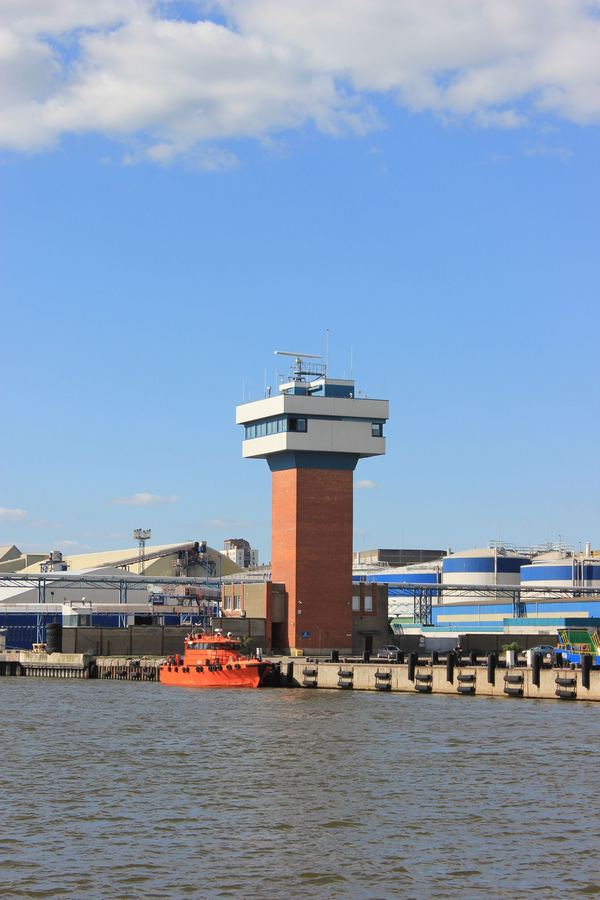
The European Investment Bank signed a €100 million loan with the Klaipėda State Seaport Authority on 15 September 2026 to upgrade Lithuania’s largest seaport for dual military and civilian use, clean-energy facilities and offshore-wind logistics. The EIB’s own press release is the primary opened source; Baltic Wind and Ports Europe same-day wraps track the same figures.
The financing covers up to half of a total project cost of around €201 million, with the balance from the European Union, national sources and other institutions, the EIB says. The whole programme is scheduled for completion by the end of 2027. Baltic Wind notes that the Nordic Investment Bank announced its own support for the port’s modernisation earlier this year — context only, not today’s loan amount.
Defence mechanism, as the EIB frames it: parts of the civilian cruise-ship terminal are being adapted to meet NATO requirements so allied naval vessels can be supported more efficiently, while the terminal remains available for passenger traffic — dual-use military mobility on the alliance’s eastern flank. Klaipėda is Lithuania’s only seaport and part of the EU’s core Trans-European Transport Network (TEN-T).
Energy and maritime mechanism in the same package: shoreside electricity supply for ferries; green-hydrogen production and refuelling infrastructure; low-emission port vessels; dredging and reinforced breakwaters to improve nautical access; and reconstructed quays intended to make Klaipėda a logistics base for deploying and maintaining Baltic offshore wind farms. Baltic Wind adds that Lithuania is preparing its first offshore wind projects in the Baltic Sea, and that a heavy-lift quay close to those sites is a precondition for building and servicing them from home rather than from Polish or Danish ports — attributed Baltic Wind framing.
Named actors: EIB Vice-President Karl Nehammer (“Few projects illustrate Europe’s priorities as clearly as the Port of Klaipėda”); Algis Latakas, director general of the Klaipėda State Seaport Authority, who called the financing agreement an important step and pointed to the dual-use cruise terminal and shore-power facilities among projects it will fund. Baltic Wind’s port-authority traffic colour — around 6,000 ship calls and some 40 million tonnes of cargo a year, and up to half a million cruise and ferry passengers — is attributed to that outlet’s citation of the authority, not independently audited here. Soft FLAG: “NATO-ready” is desk shorthand for the dual-use cruise-terminal adaptation described by the EIB; it is not a separate NATO certification label in the opened releases.
The EIB last backed the port in 2022 with €65 million for green maritime transport, Baltic Wind notes. Security and defence became one of the bank’s eight core priorities in 2025; Baltic Wind calls the Klaipėda loan one of the first Baltic port projects financed explicitly on that basis alongside energy-transition goals — outlet framing, attributed.
What to watch without mood: procurement and construction notices for the dual-use terminal and heavy-lift quay; shore-power and hydrogen station COD dates inside the end-2027 programme window; any further NIB or EU co-financing notices that change the €201 million stack.
Floor: EIB €100m (half of ~€201m) locked 15 Sep — Klaipėda dual-use NATO cruise terminal, shore power, H₂, offshore-wind quays; finish targeted end-2027.