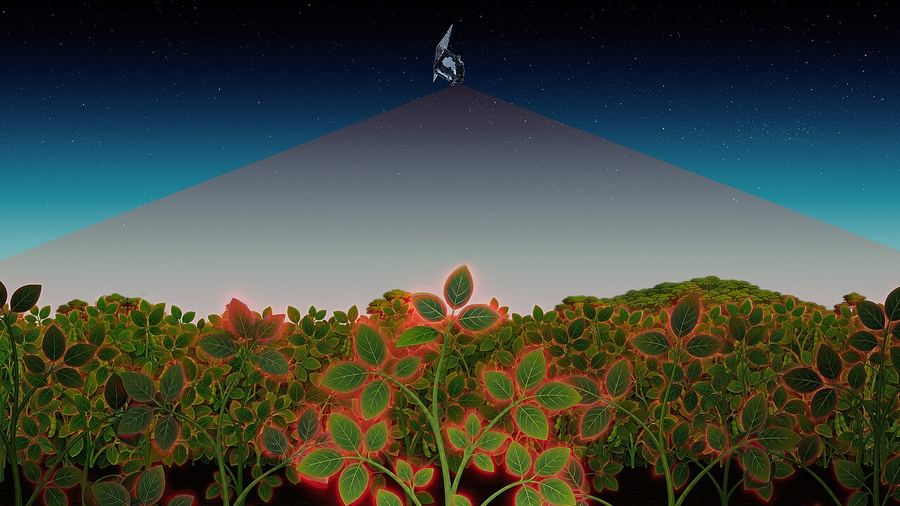
The European Space Agency’s FLEX Earth Explorer and the Copernicus Sentinel-3C satellite launched together aboard Vega-C flight VV30 from Europe’s Spaceport in French Guiana on 15 September 2026, according to ESA Press Release No. 50–2026 and Copernicus Sentinel programme reporting, both opened for this pack. Liftoff was at 03:21 CEST (14 September 22:21 local). Soft FLAG: day-of motion is orbital injection and first contact — not yet routine science-data return; commissioning follows.
The mechanism splits across two payloads stacked with the Vespa adapter. Sentinel-3C rode on top and was injected first; FLEX followed about an hour later. ESA’s European Space Operations Centre in Germany received first signals from both, confirming safe separation and ground contact. Controllers then began the launch and early orbit phase — checking health and performance before instrument commissioning. Soft FLAG: ESA says preparing and launching two satellites together is operationally demanding; that is agency framing of the campaign, not an independent difficulty score.
FLEX is ESA’s first satellite designed specifically to measure photosynthetic activity from space, the agency states. Its Fluorescence Imaging Spectrometer is built to detect the extremely faint fluorescence plants emit as they absorb sunlight during photosynthesis — a signal invisible to the eye that indicates how efficiently vegetation converts sunlight and carbon dioxide into energy. Soft FLAG: “first … specifically to measure photosynthetic activity from space” is ESA’s comparative claim. Soft FLAG: public mission briefings have pointed to first fluorescence products on the order of months after launch — not promised in the day-of PR; attribute any timing as prior briefing colour, not a COD.
Sentinel-3C is the third satellite in the Sentinel-3 series and continues systematic observation of oceans, land, ice and atmosphere — ocean and land-surface temperatures, ocean colour, sea and ice conditions, vegetation and inland-water levels — feeding Copernicus Services. After commissioning, ESA and Eumetsat jointly manage the mission: Eumetsat for routine spacecraft operations and marine/near-realtime atmospheric data; ESA for land, cryosphere, inland water and offline atmospheric products. Soft FLAG: ESA describes an eventual tandem in which FLEX first flies with Sentinel-3A, then Sentinel-3C replaces Sentinel-3A so fluorescence can be combined with near-simultaneous Sentinel-3 atmosphere and land measurements — sequencing plan, not yet the flying formation.
Named actors: Simonetta Cheli, ESA Director of Earth Observation Programmes, called the launch the culmination of scientific innovation, engineering and international cooperation under FutureEO for FLEX and Copernicus for Sentinel-3C. ESA leads the Vega-C programme with Avio as prime contractor, design authority and, for this flight, launch service operator. Vega-C can place about 2,300 kg into low-Earth orbit.
What to watch without mood: end of LEOP and start of instrument commissioning bulletins; first published FLEX fluorescence scenes; Sentinel-3C assumption of operational slots relative to Sentinel-3A/B; any slip in the planned FLEX–Sentinel tandem swap.
Floor: FLEX + Sentinel-3C on Vega-C VV30 — 15 Sep Kourou; Fluorescence Imaging Spectrometer for plant photosynthetic fluorescence (ESA); Sentinel-3C Copernicus continuity; LEOP→commissioning (science data still ahead).