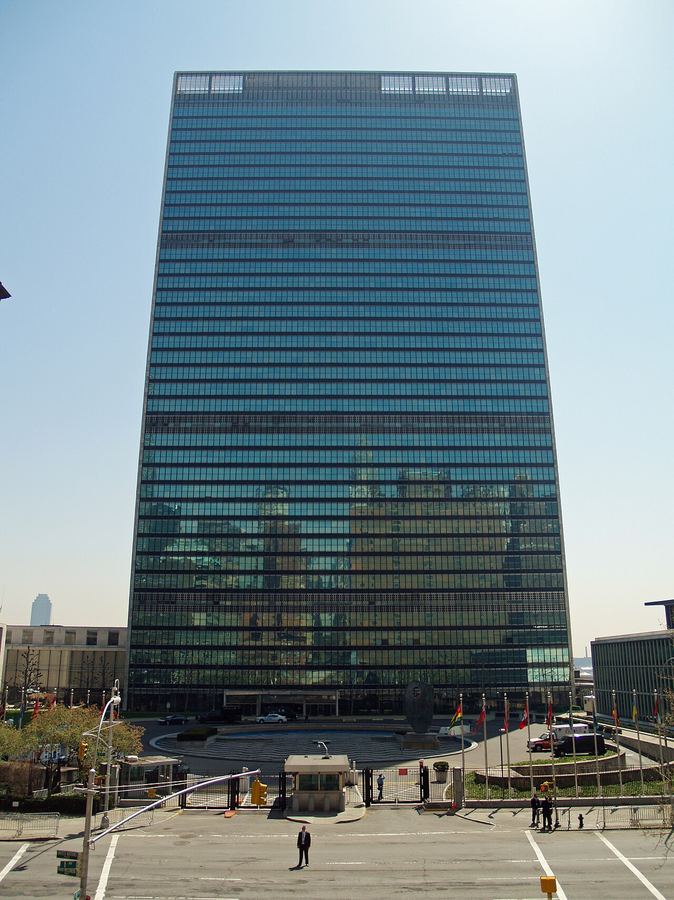
German Environment Minister Carsten Schneider deposited Germany’s instrument of ratification for the U.N. Agreement on the Conservation and Sustainable Use of Marine Biological Diversity of Areas beyond National Jurisdiction — the High Seas Treaty, or BBNJ agreement — with the United Nations in New York on Monday, 22 September 2026, according to the Federal Environment Ministry (BMUKN) press release that day and deutschland.de’s English account the following day. Schneider called the treaty “the greatest international achievement in environmental policy of recent years” and said it proves that “even in times of confrontation the principle of cooperation continues to enjoy broad international support,” speaking on the sidelines of the U.N. General Assembly, deutschland.de reported.
With Germany’s deposit, 94 states plus the European Union have ratified, including China, many EU member states, and numerous small island developing states, BMUKN stated. The treaty covers biodiversity beyond national jurisdiction — the high seas beyond a country’s territorial waters (up to 12 nautical miles) and exclusive economic zone (up to 200 nautical miles) — roughly half the planet’s surface and about two-thirds of the global ocean, the German releases say. It complements the U.N. Convention on the Law of the Sea and, for the first time, sets uniform environmental rules and a path to designate marine protected areas on the high seas, BMUKN wrote.
Germany has already put national implementing law in place. The Bundestag passed the High Seas Protection Act (HochseeSchG) in spring 2026. The U.N. treaty and the HochseeSchG become binding for German actors thirty days after accession — on 21 October 2026. From that date, German organizations and persons, including ships under the German flag and German high-seas researchers, must comply with the treaty’s rules, BMUKN stated.
The first Conference of the Parties — the Ocean COP — is scheduled for January 2027 in New York. That meeting must establish working groups, including scientific bodies, and choose the seat of the BBNJ secretariat; Chile, Belgium, and China are candidates for the secretariat seat, BMUKN said. Germany will then negotiate as a voting party. Designation of marine protected areas is expected to begin only at later conferences. To move faster when that stage opens, Germany is already working with Brazil, Chile, Ecuador, Indonesia, Micronesia, and Senegal on proposals for the first high-seas MPAs, Schneider’s ministry said. Schneider framed MPAs as retreat spaces where marine mammals and fish stocks can recover, tying the treaty to the global pledge to protect 30 percent of ocean areas by 2030. BMUKN describes the high seas as belonging to no single state but as “an inheritance of the entire majority,” and says plastics, overfishing, chemicals, and climate change currently stress the oceans worldwide — the reason, Schneider’s statement says, to create areas where marine nature can recover. Experience shows nature returns when marine areas become protected zones, he said, which is why Germany is already working with partners in Africa, South America, and Asia on first MPA designations.
What to watch: the 21 October binding date for German actors; January 2027 COP decisions on bodies and secretariat seat; and when the first MPA proposals reach a later COP agenda.
Floor: BMUKN 22 Sep 2026 — Environment Minister Carsten Schneider deposits Germany’s BBNJ / High Seas Treaty ratification in New York; 94 states + EU ratified (incl. China, many EU, SIDS). Covers biodiversity beyond national jurisdiction (~half planet surface / two-thirds ocean). HochseeSchG passed spring 2026; treaty + law binding for German actors 30 days after accession = 21 Oct 2026. First COP Jan 2027 NYC (Germany voting); MPAs later COPs; working with Brazil, Chile, Ecuador, Indonesia, Micronesia, Senegal on first MPA proposals. BMUKN primary + deutschland.de 23 Sep.