FCC Stops Approving New Drones Built With DJI Parts
From Tuesday, the Federal Communications Commission will not approve new radio devices, including drones, built with chips or circuit boards from companies on its national-security list, such as DJI and Autel; drones and other gear already approved can still be sold and flown.
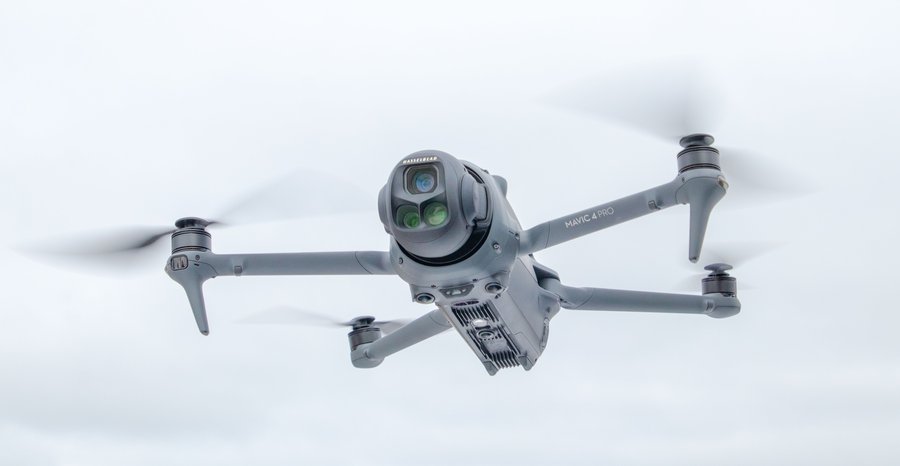
Washington — Starting Tuesday, 13 October, the Federal Communications Commission is barred from giving new equipment approvals to radio devices that contain certain electronic parts made by companies on its national-security Covered List, even when the finished product is designed and put together in the United States.
The change comes from the Commission's Third Report and Order, FCC 26-50, in ET Docket No. 21-232. The Commission adopted it on 22 July and released it on 23 July; the Federal Register published the final rule on 11 September and set the effective date for 13 October, according to the Register notice at 91 FR 57798 and the order text.
What the rule closes
For several years, U.S. companies could buy circuit boards, flight controllers, radio modules, camera boards and gimbal controllers from listed manufacturers, assemble a drone in America, and seek FCC certification as a domestic product. The new text stops that path. A device may not be authorized if it would have been barred had the Covered List company produced the entire device, the Federal Register summary says.
The ban applies to "logic-bearing" hardware: any module, chip or physical part that generates and uses timing signals above 9,000 cycles per second with digital techniques, or that uses radio-frequency energy to compute, store or move data, the order says. For drones, that takes in flight controllers, radios, camera boards and gimbal controllers. Housings, fasteners, resistors, cables and batteries are outside the definition. Computer programs and firmware are not covered by this order.
The prohibition is limited to producer-based Covered List entries — named companies — not to entries that only describe equipment made in a foreign country, TechQuire and The Drone U reported. Named producers include Huawei, ZTE, Hikvision, Dahua and Hytera. DJI and Autel Robotics are on the list because a 2024 defense law named them, TechQuire and The Drone U reported; the order cites that law as one route onto the list.
What is not banned
Applications filed before 13 October stay exempt unless they are amended to add or swap a covered component. The change is prospective: equipment already approved may still be sold, imported and used under its existing approval, the order says. Nothing in it stops people from owning or flying drones they already have.
The same order also requires Covered List companies to seek full re-certification for any change to their equipment, clarifies that marketing rules reach online marketplaces that sell unauthorized gear, and, on a slower schedule, will require those marketplaces to show a device's FCC ID at the point of sale — 1 March 2027 for marketplace-fulfilled listings and 1 June 2027 for third-party listings, TechQuire reported.
How it is enforced
Applicants must attest that a device does not contain covered components. The Commission has asked, in a further notice attached to the same document, whether it should also demand full hardware and program bills of materials. Enforcement can come later through show-cause proceedings; TechQuire cited the Odyssey Robot case, in which the FCC certified a drone in April 2026, began a show-cause in July, and revoked the authorizations on 11 August.
What it means in practice
A U.S. drone maker that designs airframes in California or Texas but relies on a DJI or Autel flight controller or radio cannot get a new FCC authorization for that design after 13 October. Substituting parts means redesigning the aircraft and certifying again. Shoppers who already own DJI or Autel craft keep them; new U.S.-assembled models that depend on those boards cannot clear the radio-approval gate.
Because almost every consumer drone needs Commission radio approval before it can be sold in the United States, the authorization gate is the Commission's main lever short of an outright sales ban.
What happens next
The further notice on bills of materials will decide how tightly the agency polices the attestation system. DJI has sued the FCC over its Covered List listing, alleging a due-process violation, PCMag reported in August, according to TechQuire. Marketplace ID-display deadlines arrive in 2027.