Trade · Geneva
WTO Opens Russia's Case Against EU Carbon Tax
A World Trade Organization panel will examine Russia's claim that the European Union's carbon border tax breaks trade rules. The case has started, and no ruling has been made.
By ClarkGeneva · Sunday, 27 September 2026
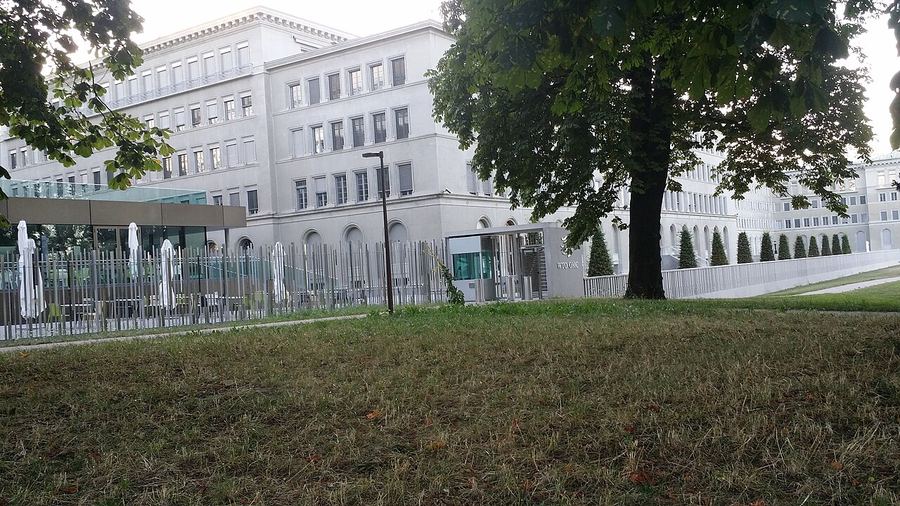
Geneva — The World Trade Organization’s Dispute Settlement Body, the WTO committee of all member countries that oversees trade disputes, on Friday, 25 September 2026, agreed to create a panel to hear Russia’s challenge to the European Union’s carbon border tax and related climate-trade rules. The case is listed as DS639. A panel is a small group of trade-law experts appointed to decide whether a country’s measures break WTO rules. Agreeing to create the panel starts the formal case. It is not a finding that the EU broke any rule.
What Russia is challenging
Russia asked for the panel a second time. WTO procedure lets a member block a first request once; at a second request, the panel is set up automatically unless every WTO member objects. The EU blocked Russia’s first request at a meeting on 24 July. At Friday’s meeting, the Dispute Settlement Body agreed to establish the panel.
Russia says the EU’s Carbon Border Adjustment Mechanism — often called CBAM — creates significant trade barriers for covered goods imported into the EU. CBAM is an EU rule that puts a carbon-related charge on certain imports. The idea is to charge for the greenhouse-gas emissions tied to making those goods abroad, so that foreign producers face a cost similar to what EU producers already pay under EU climate rules.
Russia also says the EU’s Emissions Trading System, or ETS, amounts to an export subsidy for some domestic companies. The ETS is the EU’s main market for buying and selling permits to emit greenhouse gases. Russia argues that the way the EU gives free allowances to some companies under that system strengthens those industries’ competitiveness abroad in a way that breaks WTO subsidy rules.
What the EU said
The EU said it was extraordinary that Russia — which the EU said continues to “wage its war of aggression against Ukraine” — is seeking to rely on international law to improve access for its exports into the EU market. The EU said it would take part in the proceedings not to legitimize Russia’s actions, but to reaffirm support for the rules-based multilateral trading system. It also said it is confident that both CBAM and the ETS are consistent with WTO rules.
Who else is watching
Eighteen WTO members reserved third-party rights. That means they can follow the case and, under WTO rules, make limited submissions even though they are not the main parties. The list, as reported by the WTO, is Argentina, Brazil, Canada, China, India, Indonesia, Japan, Saudi Arabia, Korea, Malaysia, Norway, Paraguay, Singapore, Switzerland, Chinese Taipei (Taiwan’s name at the WTO), Thailand, the United Kingdom and the United States.
What happens next
Panelists still have to be named, and the parties will file written arguments and hold hearings. A panel report usually takes months. Either side can then try to appeal. The WTO’s standing Appellate Body, the usual appeals court for trade disputes, has been unable to hear new appeals for years because its seats have not been filled; members again failed on Friday to launch selection processes for those vacancies. That backlog can leave panel results in limbo if a losing side files an appeal that no one can hear, unless the parties agree on another way to resolve the dispute.
For now, the only decision is that a panel will examine Russia’s claims. No ruling on CBAM or the ETS has been issued.
Floor: WTO Dispute Settlement Body, 25 Sep 2026, established panel in DS639 (European Union and its Member States — Carbon Border Adjustment Mechanism) on Russia’s second request; first request blocked 24 July. Russia challenges CBAM package and alleged export subsidy under EU Emissions Trading System. EU will participate; cites Ukraine war context; asserts CBAM and ETS consistent with WTO rules. Third parties reserved: Argentina, Brazil, Canada, China, India, Indonesia, Japan, Saudi Arabia, Korea, Malaysia, Norway, Paraguay, Singapore, Switzerland, Chinese Taipei (Taiwan’s name at the WTO), Thailand, UK, US. Panel establishment is not a ruling. Source: WTO news summary of the Dispute Settlement Body meeting, 25 Sep 2026.
Sources: WTO Dispute Settlement Body meeting news, 25 Sep 2026.