
Courts · Washington
Court Allows Third-Country Deportations
The U.S. Supreme Court on 29 September temporarily let the Trump administration resume deporting some immigrants to countries that are not their homelands, staying a Massachusetts judge's order while the justices take up the dispute for argument in December.
By ClarkWashington · Wednesday, 30 September 2026
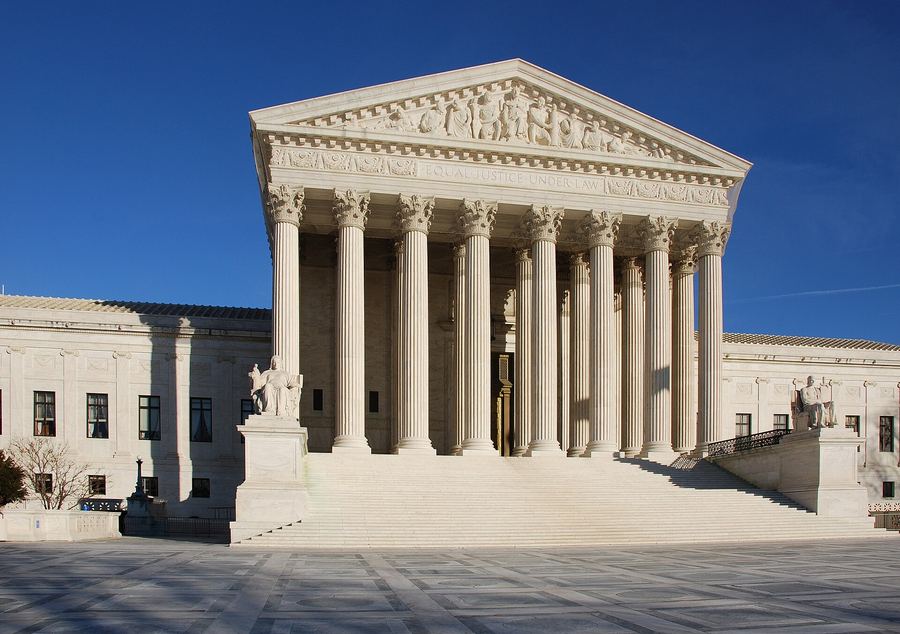
Washington — The Supreme Court on 29 September granted the Trump administration's emergency request to pause a lower-court order that had blocked many "third-country" deportations, clearing the way for those removals to resume for now while the justices hear the full case in December.
A third-country deportation — also called a third-country removal — means the United States sends someone with a deportation order to a country that is not the person's homeland and is not named as the destination in the original removal order. The practice grew after a January 2025 executive order directed the Department of Homeland Security to remove noncitizens who had final deportation orders but had not yet been sent home.
How the fight reached the Court
Four immigrants sued in federal court in Massachusetts, arguing they had to receive meaningful notice and a real chance to say they feared persecution or torture in the third country before being sent there. U.S. District Judge Brian Murphy sided with them. In a February 2026 final judgment he struck down the third-country removal policy as applied without those safeguards. The U.S. Court of Appeals for the First Circuit largely upheld his ruling. On 23 September the appeals court lifted an earlier pause, putting Murphy's limits back into force and prompting the government to rush back to the Supreme Court.
Solicitor General D. John Sauer told the justices that Murphy's order had canceled flights, raised costs, strained diplomacy and blocked removal of people the government calls dangerous criminals. Lawyers for the immigrants said the order does not ban third-country removals; it requires the government to give notice and a chance to raise fear-based claims first.
What Tuesday's order does
In a brief unsigned order in *Department of Homeland Security v. D.V.D.*, the Court stayed Murphy's February 25, 2026 order and judgment. It also treated the emergency application as a petition for review and granted that petition. The justices directed briefing on whether the district court had jurisdiction; whether it had authority to grant classwide declaratory relief and vacatur under a federal immigration statute often called 8 U.S.C. §1252(f)(1); whether the government's guidance on third-country removals is unlawful under removal statutes, the Due Process Clause, or anti-torture rules known as FARRA/CAT; and other questions the government may raise. Oral argument is set for the December 2026 session. The stay lasts until the Court's judgment is sent down.
Justices Sonia Sotomayor, Elena Kagan and Ketanji Brown Jackson would have denied the stay. As is common in emergency orders, the majority did not explain its reasoning in writing.
Context and stakes
SCOTUSblog reported this is the third time the administration has asked the Court for emergency relief in the same Massachusetts litigation; the Court had previously paused Murphy's earlier orders in 2025. NBC News noted that since early 2025 thousands of people have been sent to third countries, including South Sudan, Eswatini and Rwanda, and that the Migration Policy Institute put 2025 third-country deportations at about 15,000, with Mexico receiving the majority. The Guardian cited a project by Refugees International and Human Rights First putting more than 25,000 deportees to at least 29 countries under related agreements. Those tallies come from secondary monitors and reporting, not from the Supreme Court order itself.
Attorney General Todd Blanche called the policies lawful and essential. Immigrant advocates said people again face immediate risk of being sent to places where they cannot raise protection claims in time. The December argument will decide the lasting rules; Tuesday's order only sets the interim status.
Floor: Supreme Court miscellaneous order, 29 September 2026, *DHS v. D.V.D.*, Nos. 26-426 / 26A406 — stay of District of Massachusetts Feb. 25, 2026 order and judgment; certiorari granted; December 2026 argument; Sotomayor, Kagan, Jackson would deny stay (supremecourt.gov PDF). Underlying: Judge Brian Murphy final judgment; First Circuit largely affirmed; pause lifted 23 Sep. Sources: Supreme Court order; SCOTUSblog (Amy Howe); NBC News; The Guardian, 29 Sep 2026.
Sources: Supreme Court miscellaneous order, 29 Sep 2026; SCOTUSblog, Amy Howe, 29 Sep 2026; NBC News, 29 Sep 2026; The Guardian, 29 Sep 2026.