
Courts · Vijayawada
Andhra Court Strikes BC Quotas
The Andhra Pradesh High Court on 1 October struck down state orders that raised Backward Classes reservation to 34 percent in rural local bodies and 33.33 percent in urban ones, holding that the combined caste quotas broke the Supreme Court’s 50 percent ceiling, and ordered election preparations within six weeks.
By ClarkVijayawada · Friday, 2 October 2026
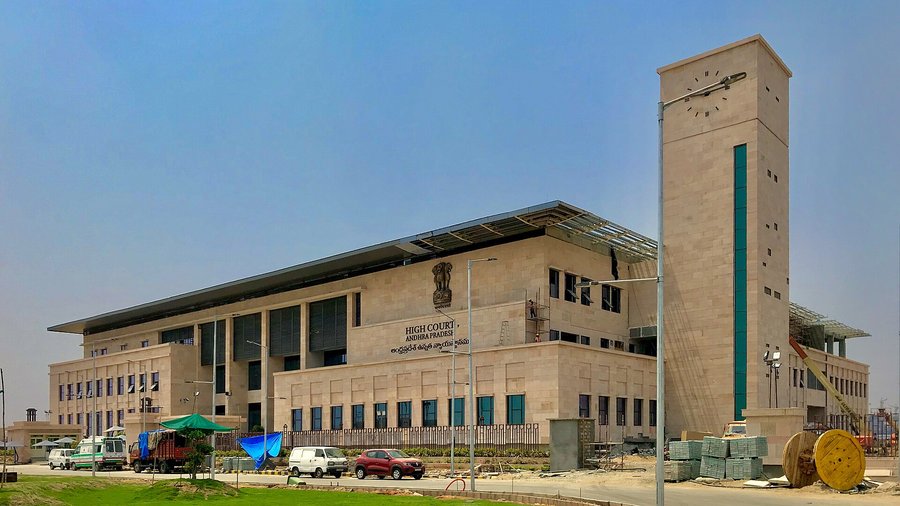
Vijayawada — A Division Bench of the Andhra Pradesh High Court led by Chief Justice Lisa Gill, with Justice Challa Gunaranjan, on 1 October set aside two government orders that had raised reservation for Backward Classes — often abbreviated BCs, a legal category of historically disadvantaged castes and communities outside the Scheduled Castes and Scheduled Tribes lists — to 34 percent in rural local bodies and 33.33 percent in urban local bodies.
The judges held that those shares, stacked on top of existing Scheduled Caste and Scheduled Tribe quotas, pushed total vertical reservation past the 50 percent ceiling the Supreme Court of India has applied to local-body political reservations. They directed the state government and the State Election Commission to begin the process of holding overdue rural and urban local elections, preferably within six weeks of 1 October.
What “reservation” means here
In Indian local government, “reservation” sets aside seats for members of listed communities so that councils reflect groups that have long been under-represented. The Supreme Court has treated political reservation in panchayats and municipalities as distinct from reservation in schools and government jobs, but it has still generally capped the combined share for Scheduled Castes, Scheduled Tribes, and Backward Classes at about 50 percent unless a state proves, with rigorous local data, that a higher figure is justified.
Chief Minister N. Chandrababu Naidu’s Telugu Desam Party–led government had announced the 34 percent BC rural quota in August as fulfillment of a 2024 campaign promise to lift BC local-body reservation from 20 percent, citing a claim that BCs are roughly half the state’s population. The High Court said the empirical record did not meet the Supreme Court’s test in cases including Vikas Kishanrao Gawali v. State of Maharashtra, which calls for a dedicated commission’s contemporaneous inquiry and local-body-wise recommendations — not a government-supplied unified family survey treated as conclusive. The bench also noted that the state had not formally accepted the dedicated commission’s August report when it issued the orders.
What the court left open
The judges gave the state liberty to revisit BC percentages — even above 50 percent aggregate — after completing the data exercise the Supreme Court requires, pointing to Janhit Abhiyan for the idea that the ceiling is not absolutely inflexible when hard facts support an exception. They rejected a petition by the opposition YSR Congress Party that sought to delay elections until a Special Intensive Revision of assembly electoral rolls finished, saying existing rolls do not go into “cold storage” during revision. They also held that freezing administrative boundaries for the Census does not bar redrawing wards inside a municipality.
For voters, the immediate effect is procedural: the enhanced BC seat map is gone, local-body polls that were already late after council terms expired in March and April are under a court clock, and any new reservation design must be rebuilt on a stronger factual record if the government wants numbers like 34 percent again.
Floor: A.P. High Court (CJ Lisa Gill & Justice Challa Gunaranjan) on 1 October 2026 set aside G.O.s providing 34% BC reservation in PRIs and 33.33% in ULBs as exceeding SC 50% local-body ceiling; liberty to revisit after Gawali-compliant empirical exercise; elections process preferably within six weeks; YSRCP SIR-delay plea dismissed (The Hindu; Indian Express; Times of India). Naidu Aug announcement / 2024 promise context (Indian Express). Sources: The Hindu; Indian Express; Times of India, 1–2 Oct 2026.
Sources: The Hindu, 1 Oct 2026; Indian Express, 2 Oct 2026; Times of India, 2 Oct 2026.