
Telecom · Washington
FCC Frees Satellite Spectrum
The Federal Communications Commission on 30 September voted to exclude the space activities it regulates from National Environmental Policy Act review and, in a separate order, opened more than 1,000 megahertz of spectrum in the 12.7 and 42 gigahertz bands for satellite broadband and related links.
By ClarkWashington · Friday, 2 October 2026
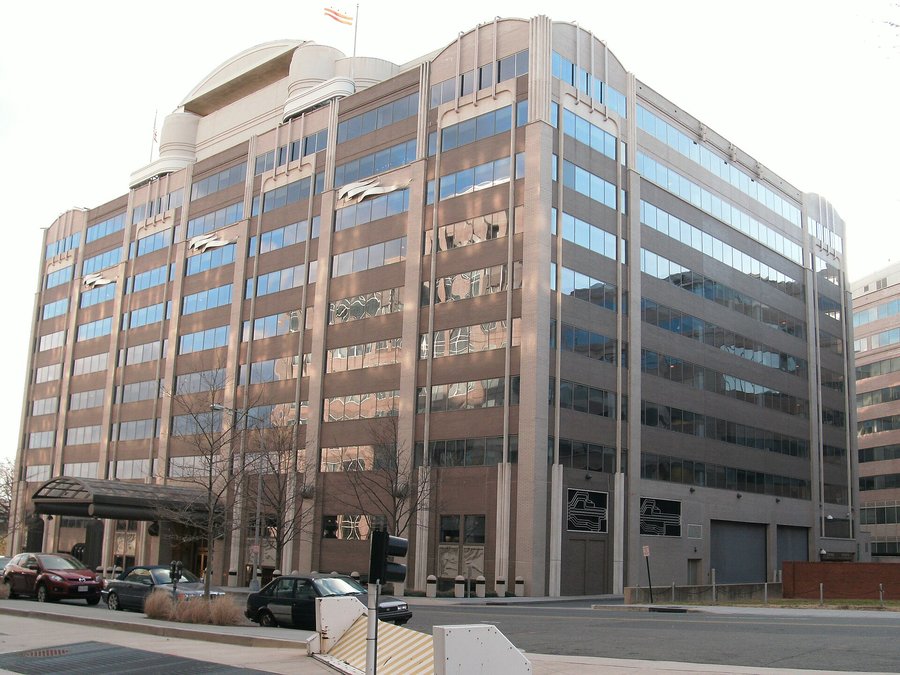
Washington — The Federal Communications Commission on 30 September adopted two major space-sector decisions at its open meeting: a Report and Order modernizing how the agency applies the National Environmental Policy Act to activities it regulates, including a clarification that many space and satellite operations are not “major federal actions” requiring NEPA environmental review, and a separate spectrum order unlocking more than 1,000 megahertz in the 12.7 gigahertz and 42 gigahertz bands for satellite use.
NEPA is the 1970 U.S. law that ordinarily makes federal agencies study the environmental effects of major actions before they approve them. A “major federal action” is the legal trigger for that study. By clarifying that licensing and related space operations fall outside that trigger — or are otherwise excluded — the FCC aims to shorten satellite and earth-station approval fights that industry groups said duplicated work already done by the Federal Aviation Administration on launches and reentries.
What the NEPA order does
Coverage of the meeting and commissioner statements describe the order as confirming that spacecraft launch authorizations in the FCC’s lane, orbital deployment and operations, spectrum authorizations, and earth stations are not treated as major federal actions under the agency’s revised approach. Commissioner Olivia Trusty said the point was to avoid “applying NEPA’s terrestrial regulatory regime to this orbital domain,” while stressing that operators remain under orbital-debris and space-safety rules and that the change does not erase U.S. treaty duties. Chairman Brendan Carr cast the reform as removing “the unpredictable specter of activist lawsuits or last-minute surprises” from next-generation systems such as direct-to-device service.
SatNews reported the NEPA order as a 2–1 vote and said it takes effect thirty days after Federal Register publication. Trade press noted that launch environmental review remains primarily an FAA responsibility — a point progressive and industry analysts have used to argue that a second NEPA pass at the FCC was duplicative. Satellite operators including AST SpaceMobile, Globalstar, Iridium, and others had asked for clarity; Amazon, SpaceX, and the Commercial Space Federation were among those welcoming the vote, according to Via Satellite.
What the spectrum order does
In the companion “satellite spectrum abundance” item, the Commission opened more than 1,000 megahertz across the 12.7–13.25 GHz neighbourhood and the 42–42.5 GHz band. The public draft described by Via Satellite adopts two-way fixed-satellite use in 12.7 GHz — uplink and downlink — including gateway and earth-stations-in-motion links for aircraft and ships, and a lighter-licensing approach in 42 GHz for intensive satellite use while keeping terrestrial fixed service primary. Commissioner Anna Gomez called the expansion “sensible spectrum management” as the country uses more space-based connectivity. The meeting agenda also teed up further notices that could unlock additional Ku-, Ka-, and D-band capacity and spectrum for in-space servicing and manufacturing — proposals, not final grants.
For households and airlines, the near-term claim from the Commission and the Satellite Industry Association is more capacity for home satellite broadband, in-flight and maritime connectivity, and gateway routing. For challengers, the NEPA clarification narrows a litigation path that astronomers and environmental groups have used to contest mega-constellations. Both orders are agency rules, not statutes; courts can still review them, and Federal Register publication starts the NEPA order’s clock.
Floor: FCC open meeting 30 September 2026 — R&O modernizing NEPA rules (WT Docket No. 25-217) clarifying space/satellite/earth-station activities outside major-federal-action NEPA review; separate R&O unlocking >1,000 MHz in 12.7 GHz and 42 GHz for FSS/satellite (SB/GN/WT dockets per Sunshine notice); NEPA effective ~30 days after FR publication per SatNews; FAA retains launch NEPA lane (Via Satellite; SatNews; FCC September 2026 meeting page; SpaceNews). Sources: FCC.gov meeting page; Via Satellite; SatNews; SpaceNews, 30 Sep–1 Oct 2026.
Sources: FCC September 2026 Open Commission Meeting; Via Satellite, 30 Sep 2026; SatNews, 1 Oct 2026; SpaceNews, 30 Sep 2026; Sunshine Act notice / agenda.