
Elections · Brasília
Brazil Election Heads to a Runoff
Senator Flávio Bolsonaro took about 47 percent of valid votes to President Luiz Inácio Lula da Silva’s 45 percent on 4 October. Neither won a majority, so the two meet again on 25 October.
By ClarkBrasília · Monday, 5 October 2026
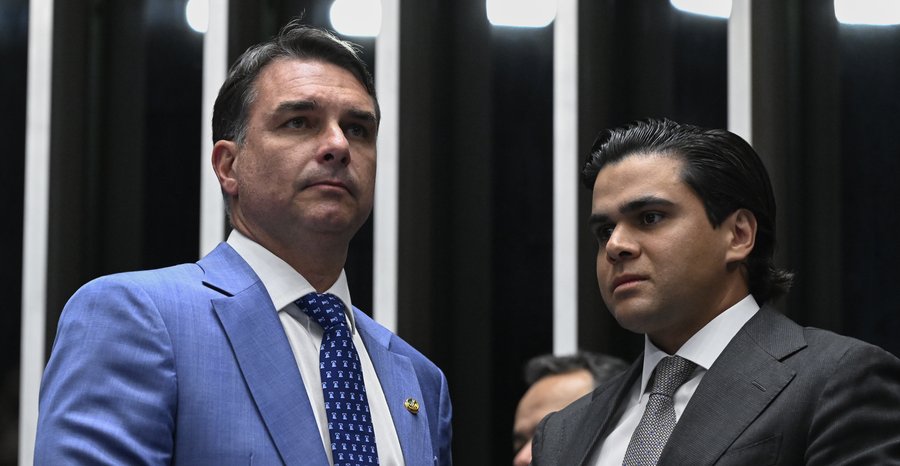
Brasília — Brazil’s presidential race is going to a second round. In the first round on 4 October, Senator Flávio Bolsonaro of the right-wing Liberal Party finished first and President Luiz Inácio Lula da Silva of the left-wing Workers’ Party finished second. Neither man won more than half of the valid votes, so they will face each other alone in a runoff on 25 October.
With 99.99 percent of ballots counted late on Sunday night, Brazil’s Superior Electoral Court, the national body that runs and counts elections, had Bolsonaro on 47.03 percent of valid votes, or 56,103,033 votes, and Lula on 45.16 percent, or 53,870,724 votes, according to the state news agency Agência Brasil. They topped a field of twelve candidates.
How Brazil picks a president
Brazilians elect their president directly. Every ballot counts the same, and there is no electoral college. A candidate who wins more than 50 percent of the valid votes in the first round wins outright. If nobody does, the top two go to a runoff three weeks later. Presidents may serve only two terms in a row. The winner takes office on 5 January 2027.
Brazil also voted on Sunday for governors, for both houses of the national Congress and for state legislatures.
Who is running
Lula, 80, is a veteran of the Brazilian left. He led the country for two terms from 2003 to 2011 and won a third term by narrowly defeating Jair Bolsonaro in 2022. He is now seeking a fourth, non-consecutive term.
Flávio Bolsonaro, 45, is a lawyer and senator and the eldest son of Jair Bolsonaro, the right-wing former president who was elected in 2018. The elder Bolsonaro is serving a 27-year prison sentence for plotting a coup after he lost the 2022 election. He backed his son’s campaign.
Why the result surprised people
Most polls had expected a runoff, but they had Lula finishing ahead. Reuters reported that private surveys before the vote had Lula leading the first round by about three percentage points. Instead, Bolsonaro finished roughly two points in front.
“The pollsters missed badly,” Robert Muggah, co-founder of the Igarapé Institute research group, told Reuters.
Analysts quoted by Reuters said Bolsonaro may have picked up “protest votes” from people who preferred another candidate but wanted Lula out first. Political analyst Rafael Favetti said that could cut both ways. “While this should benefit Flavio Bolsonaro now, his growth potential in the second round drops precisely because that support has already been front-loaded,” he said.
Lula told supporters in São Paulo that he had not seen the result coming. “I’ll admit to you that I was convinced I was going to win the election in the first round,” he said, according to Agência Brasil. “So starting tomorrow, we’ll begin a new campaign.”
Bolsonaro said the vote showed that “Brazil wants change.” He promised a government with fewer ministries, said he was the only candidate committed to ending re-election, and said he would appoint at least four justices to the Supreme Court.
The right also gained in Congress
The result went beyond the presidency. Al Jazeera, drawing on AFP, Reuters and The Associated Press, reported that right-wing parties led by Bolsonaro’s Liberal Party did well in both houses of Congress, with the Liberal Party on track to become the largest group in the Chamber of Deputies, the lower house, and gaining seats in the Senate.
Two other members of the family won Senate seats. Michelle Bolsonaro, Jair Bolsonaro’s wife and Flávio’s stepmother, won in the Federal District around Brasília, her first elected office. Flávio’s brother Carlos Bolsonaro won in the southern state of Santa Catarina.
That matters for whoever wins. Congress was already conservative-leaning, so a stronger right would make it harder for a re-elected Lula to pass his plans. A President Flávio Bolsonaro would have more room for his own, including his pledge to seek an amnesty for his father.
What the race was about
Reuters reported that voters were most worried about the rising cost of living, corruption and crime. Public debt is above 82 percent of the size of the economy, and the government has lowered its growth forecasts to 2.0 percent this year and 2.3 percent next year.
The campaign was also shadowed by the collapse of Banco Master. The bank’s former head, Daniel Vorcaro, was arrested this year and accused of a multibillion-dollar fraud. Reuters reported that federal police are investigating Flávio Bolsonaro for money laundering tied to the case. He denies wrongdoing.
What happens next
The two campaigns now have three weeks. Voters who backed the other ten candidates will decide the race. Ronaldo Caiado and Renan Santos, who together drew about 5.3 million votes, have said they will not endorse either finalist, Al Jazeera reported. Polls before Sunday showed the two men roughly tied in a head-to-head contest. Brazilians vote again on 25 October.
Floor: Superior Electoral Court count at 99.99% (Agência Brasil, 4 Oct 2026): Flávio Bolsonaro 47.03% (56,103,033) and Lula 45.16% (53,870,724); runoff 25 Oct; winner takes office 5 Jan 2027 (Guardian). Polls had Lula ahead by about three points (Reuters). Liberal Party gains in Congress; Michelle and Carlos Bolsonaro win Senate seats (Al Jazeera/AFP/Reuters/AP). Sources: Agência Brasil, 5 Oct 2026; Reuters via ThePrint, 4–5 Oct 2026; Al Jazeera, 5 Oct 2026; Guardian, 4 Oct 2026.
Sources: https://agenciabrasil.ebc.com.br/en/politica/noticia/2026-10/flavio-bolsonaro-lula-head-runoff-brazils-presidential-race; https://theprint.in/world/bolsonaro-beats-expectations-in-brazil-presidential-vote-faces-lula-in-runoff/3061894/; https://www.aljazeera.com/news/2026/10/5/brazils-presidential-race-three-key-takeaways-from-the-first-round; https://www.theguardian.com/world/ng-interactive/2026/oct/04/brazil-presidential-election-2026-first-round-live-results.