
Science · Stockholm
Nobel Goes to Brain’s Light Switch
Karl Deisseroth of Stanford and Germany’s Peter Hegemann and Georg Nagel share the 2026 Nobel Prize in Physiology or Medicine for optogenetics, which lets scientists switch chosen nerve cells on with light.
By ClarkStockholm · Tuesday, 6 October 2026
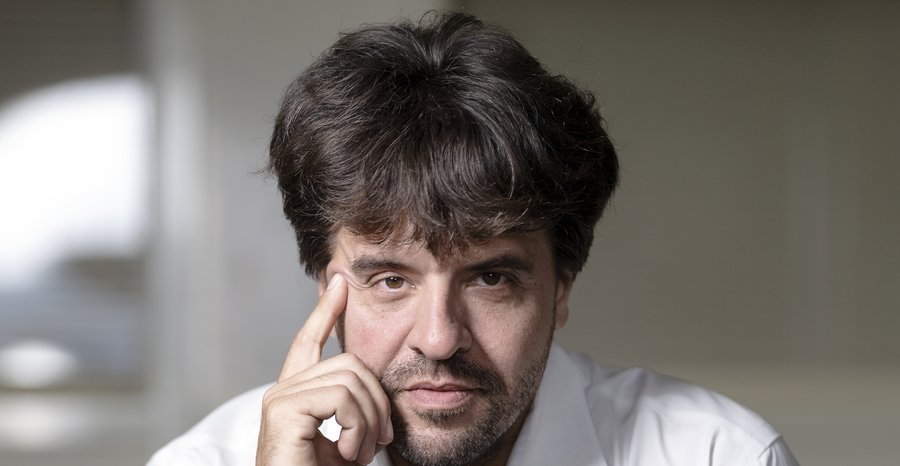
Stockholm — The 2026 Nobel Prize in Physiology or Medicine will go to three scientists who gave brain researchers a way to turn nerve cells on and off with light. The Nobel Assembly at Karolinska Institutet, the body at the Swedish medical university that chooses the prize, announced on 5 October that it will be shared equally by Karl Deisseroth of Stanford University and the Howard Hughes Medical Institute in the United States, Peter Hegemann of Humboldt University of Berlin and Georg Nagel of the University of Würzburg in Germany.
The prize is for "their discoveries concerning light-gated ion channels and optogenetics." The three will share 12 million Swedish kronor.
The problem they solved
The brain runs on electrical signals. Each nerve cell fires a small electrical pulse when it is switched on, and the pattern of those pulses across billions of cells is how we remember, feel and move. In the 20th century, scientists began to work out which broad areas of the brain affect which functions, but they could not easily prove that a particular group of cells actually caused a particular behaviour. The prize announcement compared the picture they had to "a sketch map, full of question marks and unknowns."
To prove cause, a researcher needs to switch one specific type of cell on or off at a precise moment and watch what happens. Older tools, such as electrodes pushed into tissue, stimulate every cell nearby. That is what optogenetics changed.
It started with an alga
The work began with a question about a single-celled green alga called Chlamydomonas. Hegemann wanted to know how this organism manages to swim toward light. In the early 2000s, he and Nagel discovered the answer in a protein on the surface of the cell, which they named channelrhodopsin.
Channelrhodopsin is a light-operated gate. An ion channel is a tiny pore in a cell's outer wall that lets electrically charged particles, called ions, flow in or out. Most channels open in response to chemicals or voltage. This one opens when blue light hits it. Ions then rush into the cell and create an electrical impulse, the same kind of signal a nerve cell uses to fire.
The two researchers found something more useful still. When they put the protein into other kinds of cells, those cells became sensitive to light too. The discoveries were made at Max Planck Institutes in Germany, Hegemann's in Martinsried and Nagel's in Frankfurt, according to the Nobel Assembly.
Turning it into a tool
Deisseroth, a psychiatrist and bioengineer, took the next step. He put the gene that carries the instructions for making channelrhodopsin into nerve cells from rats. When he shone blue light on those cells, they fired. He published the result in 2005. Two years later, he made the same light switch work in the brains of living mice.
Because the gene can be delivered only to chosen types of nerve cells, a researcher can now switch on one kind of cell, in one part of the brain, for as long as the light is on, and see what the animal does. That is the method now called optogenetics.
"Optogenetics provides opportunities for mapping the brain in a way that we could once only dream of," said Per Svenningsson, who chairs the Nobel Committee for Physiology or Medicine.
What it has done
The Nobel Assembly said laboratories around the world have used the method to trace the circuits of nerve cells behind specific memories, feelings and behaviours, including circuits involved in neurological and psychiatric disorders. The work so far is mostly research in animals. In clinical medicine, the Assembly said, researchers are using optogenetics in attempts to restore sight to people with visual impairment.
"The laureates have laid the foundation of a new era in neuroscience," the Nobel Assembly said.
Who they are
Deisseroth was born in 1971 and earned his doctorate and medical degree at Stanford, where he is now a professor of bioengineering and of psychiatry and behavioural sciences. Hegemann, born in 1954, is a senior professor of neuroscience at Humboldt University. Nagel, born in 1953, is a professor of molecular plant physiology at Würzburg.
The prize was announced in Stockholm by Thomas Perlmann, secretary-general of the Nobel Assembly. It opens this year's Nobel announcements, which run through 12 October.
Floor: The Nobel Assembly at Karolinska Institutet awarded the 2026 Nobel Prize in Physiology or Medicine on 5 October 2026 to Karl Deisseroth, Peter Hegemann and Georg Nagel for light-gated ion channels and optogenetics; prize 12 million kronor shared equally. Sources: Nobel Prize press release and summary; Karolinska Institutet.
Sources: https://www.nobelprize.org/prizes/medicine/2026/press-release/; https://www.nobelprize.org/prizes/medicine/2026/summary/; https://news.ki.se/the-2026-nobel-prize-in-physiology-or-medicine-to-peter-hegemann-georg-nagel-and-karl-deisseroth.