
Technology · Shenzhen
Qualcomm and Huawei Sign Patent Deal
Huawei, the Chinese tech giant on a U.S. trade blacklist, and the American chip designer Qualcomm announced a multi-year deal on 5 October letting each use the other's patents. Qualcomm will also buy some Huawei U.S. patents if regulators approve.
By ClarkShenzhen · Tuesday, 6 October 2026
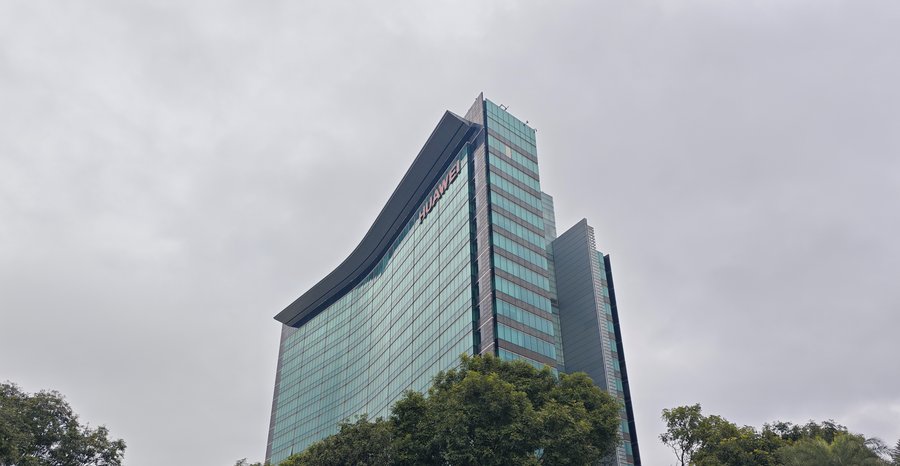
Shenzhen — Huawei and Qualcomm, two of the biggest names in mobile technology, have signed a long-term agreement to share their patents. The two announced on Monday, 5 October, that the deal gives each company a licence to the other's patents in 5G wireless, computing, artificial intelligence and networking. As part of it, Qualcomm agreed to buy a set of Huawei's American patents.
It is the first licensing agreement between the two companies that covers 5G, the current generation of mobile networks, Huawei said. The deal "will close following receipt of the necessary regulatory approvals," the companies said in a joint statement; Qualcomm has since described the licence as already entered into and the patent purchase as a separate step. Neither disclosed the price, how long the deal lasts, or how many patents change hands.
Who the two companies are
Qualcomm is an American company that designs the processors and modems, the chips that connect a phone to the network, used in many of the world's smartphones. It also earns money by charging phone makers for the right to use its patented wireless inventions.
Huawei, based in Shenzhen in southern China, makes telecom network equipment and is, in Qualcomm's own words, "one of the largest smartphone OEMs in China," meaning one of the country's biggest phone makers. Since 2019 it has been on the U.S. Entity List, a trade blacklist that bars American firms from selling it many products without a government licence. In May 2024 the U.S. Commerce Department revoked the export licence that had let Qualcomm sell Huawei 4G and certain other chips, and Qualcomm told investors it expected no further chip sales to the company.
The two also had a patent licence before, but it ran out. Qualcomm's latest annual report says that from early 2025 its licensing income "did not include royalties from Huawei, whose license agreement has expired." Monday's deal puts Huawei back under a Qualcomm licence; the companies have not disclosed its financial terms.
What a patent cross-licence is
A patent gives its owner the right to stop others from using an invention, or to charge them for it. Modern phones rely on thousands of patents, many of them "standard-essential," meaning any device that follows a shared technical standard such as 5G cannot avoid using them. Companies that own such patents promise to license them on fair, reasonable and non-discriminatory terms, known as FRAND, and the joint statement says this deal follows those principles.
In a cross-licence, two companies each grant the other permission to use their patents, which removes the threat of lawsuits between them. Depending on whose portfolio is judged more valuable, one side may also pay the other.
What is known and what is disputed
Huawei made its first patent-licence payment to Qualcomm in 2001 and earned its first licence income, from Motorola, in 2011, Reuters reported. Huawei says that once the Qualcomm deal is completed, the total contract value of all its patent-licensing agreements, not this deal alone, will exceed $6.9 billion. In November 2025 Alan Fan, who heads Huawei's intellectual property work, said the company's licensing income had hit a record $630 million in 2024, the Chinese financial outlet Cailian Press reported, using his Chinese name, Fan Zhiyong.
Some coverage went further than the companies' statement. Nikkei Asia reported, citing Huawei's announcement, that the deal would make Qualcomm a net payer to Huawei for the first time, meaning Qualcomm would pay Huawei more than Huawei pays it, and Bloomberg, citing a Huawei spokesperson, reported that the cross-licence covers patents behind Huawei's new "LogicFolding" chipmaking method. Qualcomm rejected both claims. "The terms are confidential, but reports characterizing Qualcomm as a net payor on the license agreement are incorrect," a Qualcomm spokesperson told the patent-news site ip fray. "In addition, assertions that the agreement is related to LogicFold are not accurate." The spokesperson added that Qualcomm "has agreed to purchase certain Huawei non-cellular U.S. patents," meaning patents that are not about mobile-network technology.
What both companies do confirm is that Qualcomm has agreed to buy patents from Huawei, and that the two companies, cut off from each other's chip business by U.S. rules, are again licensing each other's inventions.
What the two sides said
Fan pointed to Huawei's contributions to the 4G and 5G standards, including polar codes, a way of protecting signals against errors that was adopted in 5G. "This agreement not only demonstrates the value of Huawei's innovations, but also recognizes Qualcomm's foundational contributions to modern communication technologies," he said.
John Han, who runs Qualcomm's licensing business, said the agreement "reaffirms industry recognition of Qualcomm's 5G technology leadership and the success of Qualcomm's 5G SEP licensing program," using the industry's abbreviation for standard-essential patents. He added that it "reflects Qualcomm's recognition of Huawei's continued innovation and intellectual property in 5G and other technology fields."
What happens next
The patent purchase cannot be completed until regulators sign off. Bloomberg reported that the deal is subject to review by the U.S. Federal Trade Commission under the Hart-Scott-Rodino Act, a law that requires companies to notify American antitrust authorities before completing acquisitions above a certain size; the threshold for 2026 is $133.9 million, according to the commission. The companies have not given a timetable. Because Huawei remains on the Entity List, the technology site TechSpot noted, a U.S. company paying a blacklisted Chinese firm for AI and computing patents is "exactly the kind of transaction that invites scrutiny."
Floor: Huawei and Qualcomm joint announcement, Shenzhen, 5 Oct 2026: multi-year, broad patent licence agreement with cross-licences across 5G, compute, AI and networking, plus Qualcomm's purchase of certain Huawei U.S. patents; the transaction closes after necessary regulatory approvals; financial terms, duration and patent count undisclosed. Huawei (via Reuters, TechSpot, Cailian Press): first Huawei–Qualcomm licence covering 5G; total contract value of all Huawei licensing agreements to exceed $6.9 billion once completed. Huawei first paid Qualcomm for a licence in 2001 (Reuters, Nikkei Asia, TechSpot, Cailian Press). Alan Fan (Fan Zhiyong), November 2025, via Cailian Press: record $630 million licensing income in 2024. Qualcomm spokesperson (to ip fray): terms confidential; "net payor" and LogicFold reports "incorrect" / "not accurate"; purchased patents are non-cellular. Background: Qualcomm Form 10-K for fiscal 2025 (Huawei royalties excluded from the second quarter of fiscal 2025; May 2024 export-licence revocation). HSR threshold per FTC. Sources: Huawei; Qualcomm; Reuters; Bloomberg; Nikkei Asia; ip fray; TechSpot; Cailian Press; U.S. SEC; FTC.
Sources: https://www.huawei.com/en/news/2026/10/qualcomm-broad-patent-agreement; https://www.qualcomm.com/news/releases/2026/10/huawei-and-qualcomm-announce-broad-patent-license-agreement; https://ipfray.com/huawei-qualcomm-sign-broad-multi-year-cross-patent-licensing-agreement/; https://www.streetinsider.com/Reuters/Huawei+agrees+to+a+multi-year+patent+licensing+deal+with+Qualcomm/27144575.html; https://finance.yahoo.com/technology/ai/articles/qualcomm-licenses-patents-huawei-logicfolding-060003829.html; https://asia.nikkei.com/spotlight/huawei-crackdown/qualcomm-to-pay-huawei-for-first-time-in-5g-ai-patent-breakthrough; https://www.techspot.com/news/114104-qualcomm-signs-first-5g-patent-deal-huawei-agrees.html; https://m.cls.cn/detail/2497978; https://www.sec.gov/Archives/edgar/data/804328/000080432825000085/qcom-20250928.htm; https://www.ftc.gov/enforcement/competition-matters/2026/01/new-hsr-thresholds-filing-fees-2026.