
Politics · Washington
Roberts Pauses Deadline in Political Ad-Rate Fight
Chief Justice John Roberts temporarily lifted an appeals court order forcing the Federal Communications Commission to rule by Friday on whether party ads qualify for the cheapest broadcast rates reserved for candidates.
By ClarkWashington · Friday, 9 October 2026
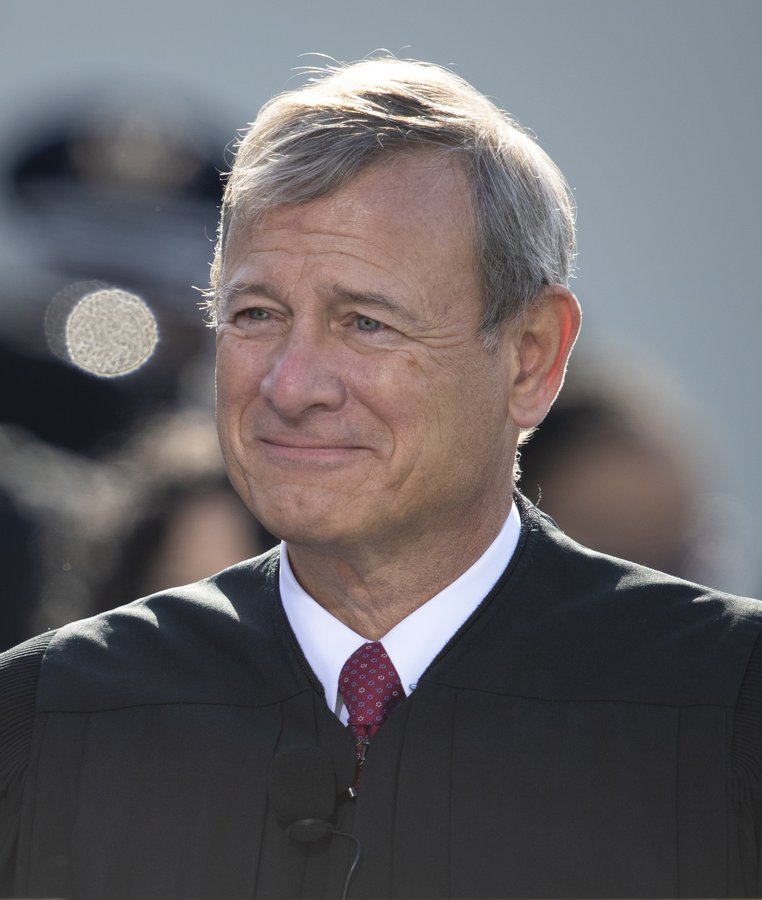
Washington — Chief Justice John Roberts on 8 October paused a lower-court deadline that would have forced the Federal Communications Commission, the agency that regulates radio and television, to decide, by noon on 9 October, a fight over who gets the cheapest rates for political ads on radio and television in the weeks before the midterm elections.
The order in Federal Communications Commission v. Sherrod Brown stays a 7 October judgment of the U.S. Court of Appeals for the Fourth Circuit. Roberts, who handles emergency applications from that circuit, put the deadline on hold "pending further order of the undersigned or of the Court" and told the challengers to respond by 5 p.m. Eastern on 10 October.
It is the second time this autumn the Supreme Court has sided with the administration in the same dispute. This time Roberts acted alone, and the pause is temporary.
What the cheapest rate is
Federal law requires broadcasters, in the 45 days before a primary and the 60 days before a general election, to charge legally qualified candidates no more than the station's "lowest unit charge" — the cheapest rate the station offers for the same class and amount of airtime. The idea is to keep candidates from being priced out of the airwaves in the final stretch.
In March 2026 the FCC's Media Bureau issued a public notice saying that lowest-unit-charge protection also covers ads by a candidate's authorised committees, including joint fundraising committees, and ads that count as coordinated spending between a political party and a candidate. Democrats running in battleground races — including Ohio Senate candidate Sherrod Brown and Georgia Senator Jon Ossoff — challenged that reading. They say the statute limits the cheap rate to candidates themselves, not to party committees.
How the case got here
A divided Fourth Circuit panel in August set aside the public notice, finding the Communications Act does not extend the cheapest rates to parties or to joint fundraising committees with non-candidate members. On 4 September the Supreme Court stayed that ruling so the notice could remain in effect while the FCC finished reviewing the candidates' internal challenge, USA Today and broadcast-law summaries reported. The unsigned majority stressed that the Communications Act expects an aggrieved party to wait for the Commission to act before going to court.
The candidates then sought a writ of mandamus — a rare court order commanding an agency to act. On 7 October a 2–1 Fourth Circuit panel directed the FCC to resolve the candidates' application for review by noon on 9 October. The majority said the agency's delay looked like "gamesmanship." Judge J. Harvie Wilkinson dissented, calling the majority's approach a "new board game: Make The Supreme Court Say It Twice."
What the Justice Department argued
Solicitor General D. John Sauer asked Roberts for an immediate stay. He said judicial intervention "at this late date could upend campaign-finance rules in the 'critical weeks leading up to the midterms'" and that the FCC was still taking public comment and could reasonably wait to rule mid-campaign. Law&Crime reported the filing.
Why it matters for November
USA Today reported that Republican party committees have raised considerably more money than Democratic ones, so cheaper rates for party and coordinated ads could help the GOP close gaps where individual Democratic candidates have outraised their Republican opponents. The FCC notice remains in effect while the stay holds. The underlying legal question — whether parties get the candidate rate — is still unresolved on the merits.
Floor: The fight is not about whether campaigns may advertise. It is about whether party committees get the same cut-rate airtime candidates do — and whether a court can force the FCC to answer before Election Day.
Sources: https://