
Travel · Luxembourg
Airlines Can't Just Blame Air Traffic Control
The EU's top court said a controller's hold alone does not let airlines skip paying up to €600 for delays of three hours or more; they must prove an extraordinary cause behind it.
By ClarkLuxembourg · Friday, 9 October 2026
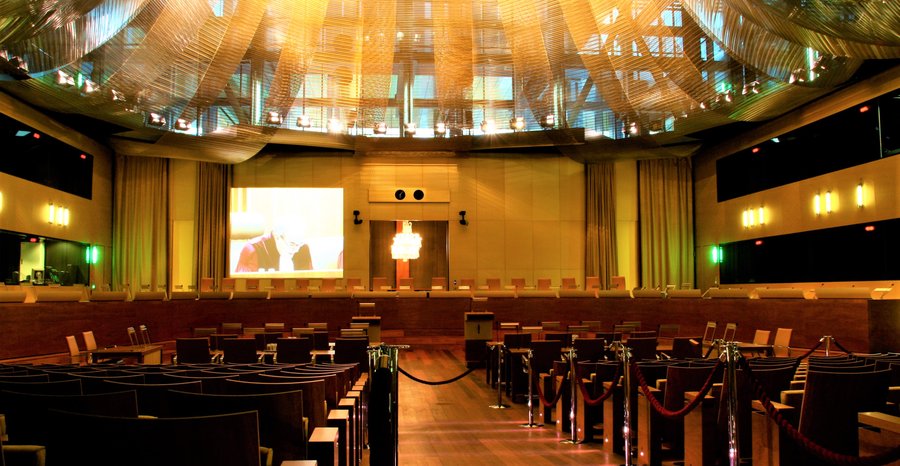
Luxembourg — Airlines flying under Europe's passenger-rights law can no longer turn down compensation for a long delay simply by saying air traffic control held the plane, the Court of Justice of the European Union ruled on 8 October.
The court, the EU's highest, said an airline must show why the restriction was imposed. Only if that underlying cause, such as severe weather, was itself out of the ordinary and beyond the airline's control can the carrier avoid paying. "It must demonstrate that that decision was taken on account of a circumstance which was itself of an extraordinary nature," the court said.
The rule behind it
Under a 2004 EU regulation, passengers who reach their final destination three hours or more late can claim fixed compensation of €250, €400 or €600, depending on the distance flown. On the longest flights, of more than 3,500 kilometres between the EU and elsewhere, the payment is €300 if the delay is under four hours and €600 from four hours, according to the EU's guide for travellers. Airlines do not have to pay if the delay was caused by "extraordinary circumstances" they could not have avoided with all reasonable measures. The airline, not the passenger, has to prove it.
Air traffic management decisions, the slots and holds that controllers impose to keep crowded or storm-hit airspace safe, have been a common reason airlines give. The EU's own guide for travellers lists them as an example of extraordinary circumstances. Piotr Gad, a lawyer who represented the claims company in the case, said such restrictions have overtaken bird strikes among the explanations airlines most often give for refusing payment, Courthouse News reported.
The case
The dispute began with a LOT Polish Airlines flight from Izmir, Türkiye, to Warsaw in July 2023 that arrived more than three hours late. The passenger had handed the €400 claim to DelayFix, a company that pursues compensation claims. According to the court and Courthouse News, the aircraft's previous flight, from Katowice to Izmir, was held up by airspace restrictions over Hungary and Romania imposed because of bad weather. A technical fault in Izmir then took more than two hours to repair. Courthouse News reported that the flight reached Warsaw three hours and seven minutes late.
A Warsaw court asked the EU courts how to treat the air traffic part of the delay. In January the General Court, the EU's lower court, which since October 2024 has handled questions about passenger compensation, said such a decision is, in principle, beyond an airline's control whatever the reason behind it, unless the airline helped cause it.
The Court of Justice reviewed that ruling on a proposal from its First Advocate General, an adviser to the court, and set aside the disputed part of it. It was the first time the higher court had overturned a ruling of this kind by the General Court. Airlines face air traffic decisions "as a matter of course and on a regular basis," the court said, so the decision alone cannot excuse them.
What it means in practice
The ruling binds national courts across the EU when they hear similar claims. EU rules cover any flight leaving an EU airport, on any airline, and flights into the EU on European airlines. They also apply to flights to and from Iceland, Norway and Switzerland. That includes a New Yorker flying home from Paris on any carrier, or an Athenian flying in from New York on a European one.
If an airline refuses to pay for a delay of three hours or more and cites only "air traffic control" or "ATC restrictions," the passenger can ask what caused the restriction and for proof. The EU guide says airlines must back their claims with evidence such as logbook extracts or incident reports, and that passengers who get no satisfactory explanation can turn to their national enforcement authority. If the airline cannot show an extraordinary cause, such as weather severe enough to stop safe flying, the excuse fails.
The ruling cuts both ways. The court said an extraordinary event need not cause a three-hour delay on its own. But when a delay has two causes, the part caused by the extraordinary event is subtracted from the total. In the LOT case, the Warsaw court had found that without the weather hold the flight would have been less than three hours late, the EU court noted. If that weather proves severe enough to qualify, and LOT shows it took all reasonable steps, the passenger could get nothing. The Warsaw court will decide the €400.
What is still open
Lawyers quoted by Courthouse News said the ruling leaves gaps. Sophie Haiden, a Vienna passenger-rights lawyer, said courts may still split on delays caused by controller shortages or crowded routes. Claudia Bischof of Lindbergh Legal called it "less about expanding passenger rights than about ensuring that the existing exemption is applied correctly and consistently."
In July the European Parliament approved an overhaul of the passenger-rights law agreed with EU governments. It keeps the three-hour threshold and the €250 to €600 payments, adds an open list of extraordinary circumstances, and gives airlines and governments a year to prepare once it takes effect, the Parliament said. Until then, the 2004 rules, as read by the courts, decide claims.
Floor: A delayed flight no longer ends with the words "air traffic control." From now on, the airline has to show what was behind them.
Sources: https://