
International law · Oslo
War-Crimes Judge Wins Peace Nobel
South African jurist Navi Pillay, 85, was honored for her work on international law; hours later the United States put the International Criminal Court, where she once sat as a judge, on its sanctions blacklist.
By ClarkOslo · Saturday, 10 October 2026
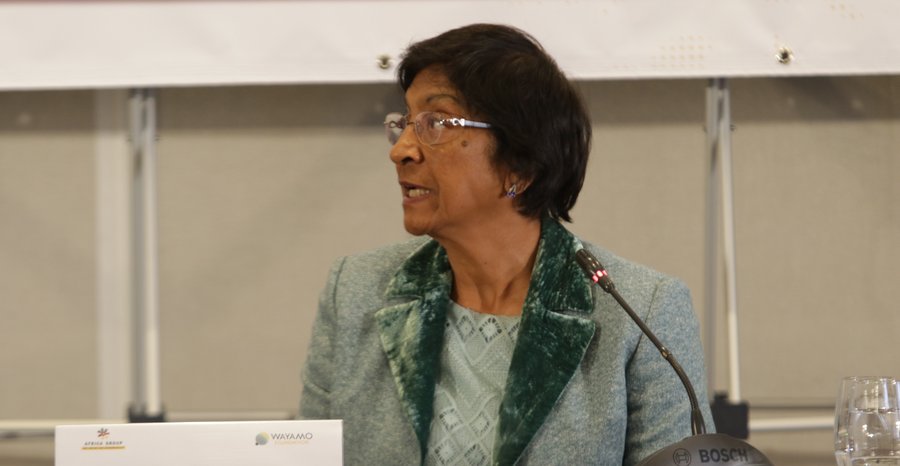
Oslo — The Norwegian Nobel Committee on 9 October awarded the 2026 Nobel Peace Prize to Navanethem "Navi" Pillay, a South African judge and former United Nations human rights chief, "for her efforts to promote peace and international law."
The same day, the United States imposed sanctions on the International Criminal Court itself, the war-crimes tribunal in The Hague where Pillay served as a judge from 2003.
Who Navi Pillay is
Pillay, 85, grew up under apartheid, the system of racial segregation that ruled South Africa until the 1990s, as a bus driver's daughter in a poor Indian district of Durban, the BBC reported. She became the first woman to open a law practice in Natal province in 1967 and defended Nelson Mandela and other anti-apartheid activists. She later became the first non-white woman appointed to South Africa's High Court.
She went on to serve as a judge, and for four years as president, of the UN tribunal set up to try those responsible for the 1994 genocide in Rwanda, in which 800,000 people were killed. She was then a judge at the International Criminal Court, on its appeals chamber from 2003 to 2008, Reuters reported, and later the UN High Commissioner for Human Rights. From 2021 to 2025 she chaired a UN commission of inquiry on the Israeli-occupied Palestinian territories. She now sits as a judge at the International Court of Justice, the UN's highest court, in the case in which The Gambia accuses Myanmar of genocide against the Rohingya people.
Why the committee chose her
The committee said Pillay had been "instrumental in ensuring that war crimes, crimes against humanity and genocide are prosecuted." It pointed to the Rwanda tribunal's ruling that rape and sexual violence could amount to a crime against humanity and to genocide, saying her influence was "a significant factor." In the same case, a defendant faced charges of inciting genocide purely by spreading propaganda for the first time.
The committee's citation also made a pointed claim about the present. "The system of international law is under tremendous pressure, and its institutions are under attack," it said. "Today, as these same judges are sanctioned, and their institutions are attacked, we need people of courage."
Committee chair Jørgen Watne Frydnes said the panel had been unable to reach Pillay in advance. Reacting to the news at the Palace of Justice in Nuremberg, Germany, Pillay said "it must be a joke," the BBC reported. She dedicated the award to "all the survivors of international crimes." The prize is worth 12 million Swedish kronor, about $1.2 million, NPR reported. She is South Africa's fifth peace laureate, after winners including Mandela and Archbishop Desmond Tutu.
Israel's foreign ministry called the award a "grotesque weaponisation" of the prize, citing her commission's finding that Israel committed genocidal acts in Gaza, a finding Israel rejects. Frydnes said the committee took no position on that question and that the prize was given "for her whole work."
The U.S. sanctions
Hours later, Secretary of State Marco Rubio announced that the United States was designating the court under a February 2025 executive order. "We will ban transactions with this rogue court, cutting off their resources and crippling its ability to operate," his statement said.
Designation puts the court on the Treasury's list of blocked entities. Any court property under U.S. control is frozen, and Americans and U.S. companies are barred from doing business with it unless the Treasury allows it. Washington had already sanctioned 17 people, including judges and prosecutors, under the same order, the State Department said.
The Treasury issued four general licenses, or blanket exceptions, at the same time. One gives a wind-down period until 7 April 2027 for the court's routine operations, including member-state contributions, salaries, rent and utilities. Others allow telecommunications, internet and business software services, pension payments, and the detention of nine named prisoners, including former Philippine President Rodrigo Duterte, according to the license texts. Rubio said the measures were built to let the court's member states "negotiate and present a solution" to U.S. concerns.
The United States has never joined the court. It objects to arrest warrants for Israeli leaders, including Prime Minister Benjamin Netanyahu, and to a past investigation into U.S. troops in Afghanistan, Reuters reported. "Either the ICC will end its threats, or we will end the ICC," Rubio said.
What it means in practice
U.S. sanctions typically bar all U.S.-based companies from working with a sanctioned body, forcing banks to shut accounts, insurers to end coverage and software firms to stop cooperating, Reuters reported. The court has 125 member countries, including every European Union state. It had been preparing for months by moving its computers off Microsoft software and arranging new banking and health insurance, and its registrar has asked the EU to be ready to use a legal tool that shields European countries from the effects of foreign sanctions. Deputy prosecutor Nazhat Shameem Khan said the court's work "will continue across all our situations."
What happens next
The court and its members have until April before the wind-down license ends, and Washington has said it will "adjust accordingly" depending on what they offer.
Floor: The Nobel committee honored a former judge of the International Criminal Court on the same day Washington put that court on its blocked list.
Sources: Norwegian Nobel Committee, press release; BBC News; NPR; U.S. State Department statement; U.S. State Department fact sheet; Office of Foreign Assets Control, International Criminal Court designation and General Licenses 13–16; sanctions.com; Reuters via ThePrint.