
Infrastructure · Kırklareli
Turkey Opens Fast Rail Line to EU Border
The 153-kilometre line, part-paid by the European Union, now runs from near Istanbul to the Bulgarian border; officials say trips could fall from four hours to 1.5 once the last stretch is built.
By ClarkKırklareli · Saturday, 10 October 2026
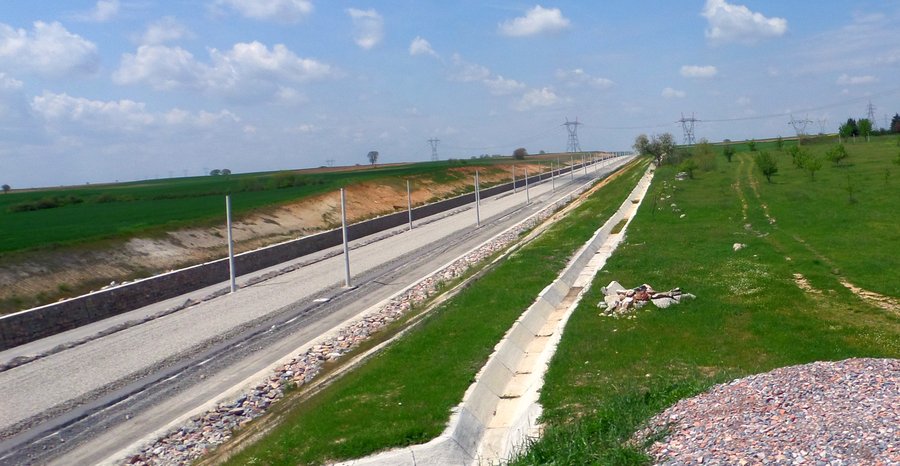
KIRKLARELI, Turkey — Turkey on 9 October opened a 153-kilometre (95-mile) high-speed railway running west from Istanbul's outskirts to Kapıkule, its main crossing into Bulgaria and the European Union, a project the EU helped pay for.
President Recep Tayyip Erdoğan, Transport and Infrastructure Minister Abdulkadir Uraloğlu and the European Union's enlargement commissioner, Marta Kos, opened the Çerkezköy–Kapıkule line at a ceremony at Babaeski station in Kırklareli province. The EU contributed €275 million, Kos said, making it the biggest project carried out so far under Turkey–EU financial cooperation.
What was built
The new section crosses Thrace, the corner of Turkey that lies in Europe. It runs from Çerkezköy, west of Istanbul, to Kapıkule near the city of Edirne, where Turkey meets both Bulgaria and Greece. The double-track, electrified line is built for passenger trains at up to 200 kilometres an hour. It brings the provinces of Tekirdağ, Kırklareli and Edirne onto Turkey's high-speed network for the first time, Türkiye Today reported.
It is the longest piece of a 229-kilometre route from Halkalı, on Istanbul's western edge, to the border. Work continues on a 69-kilometre stretch between Ispartakule and Çerkezköy. A roughly 7-kilometre link from Ispartakule to Halkalı is nearly finished and due to open before the end of the year, Türkiye Today reported.
At the border, the Kapıkule station area was expanded from 253,000 to 660,000 square metres and its tracks from 23 to 42 to cut waiting times, Uraloğlu said.
What it changes
Once the full Halkalı–Kapıkule route is finished, officials say passenger trips will fall from about four hours to 1.5 hours and freight transit from 8.5 hours to 3.5. Yearly passenger capacity is expected to rise from 600,000 to about 3 million and freight capacity from 1.5 million to 9.5 million tons, according to figures officials gave to the Daily of Turkey news site.
"This means fewer truck queues at Kapikule, less traffic and faster trade," Kos said. She called the railway "a success story of our cooperation" and added: "But this is only a first step. Our ambition is greater."
The bigger route
The line is part of what is called the Middle Corridor, an overland trade route connecting Asia and Europe through Central Asia, the Caucasus and Turkey, the Daily of Turkey reported. Uraloğlu said it completes a chain that begins with the Baku–Tbilisi–Kars railway through Azerbaijan and Georgia and crosses from Asia to Europe in Istanbul on the Marmaray rail link. At Kapıkule it meets the European rail network, and the project is part of the EU's Trans-European Transport Network.
Kos said alternative land routes were becoming more important for economic security as global supply chains come under pressure and risks rise at "critical maritime transit points," the narrow sea lanes that much of world trade passes through. She said a planned rail crossing on Istanbul's third Bosphorus bridge would be the next key link.
What it means in practice
For travellers, trains between Istanbul and the Bulgarian border will get much faster once the last stretch opens. For businesses moving goods between Turkey and Europe, the line offers what Kos described as a reliable alternative to road transport and to the truck queues at Kapıkule. For Greece and Bulgaria, it puts a fast electrified railway right up to their borders.
Uraloğlu said Turkey's high-speed network now totals 2,604 kilometres, reaching 14 provinces, up from 11, with 27 expected by 2028.
What happens next
The remaining Ispartakule–Çerkezköy section must be finished before trains can run at full speed from Istanbul to the border. Officials did not give a date for finishing that section. Kos said she hoped European lenders, including the European Investment Bank, would join future projects.
Floor: Turkey's fast trains now reach the EU's edge; the last stretch into Istanbul is still being built.
Sources: Türkiye Today; Daily of Turkey.