Judge Throws Out Federal Suit Against Michigan's Cage-Free Egg Law
A federal judge dismissed the Trump administration's lawsuit because it had not shown that the law harmed the federal government, so eggs sold in Michigan must still come from cage-free hens; the government could appeal or sue again.
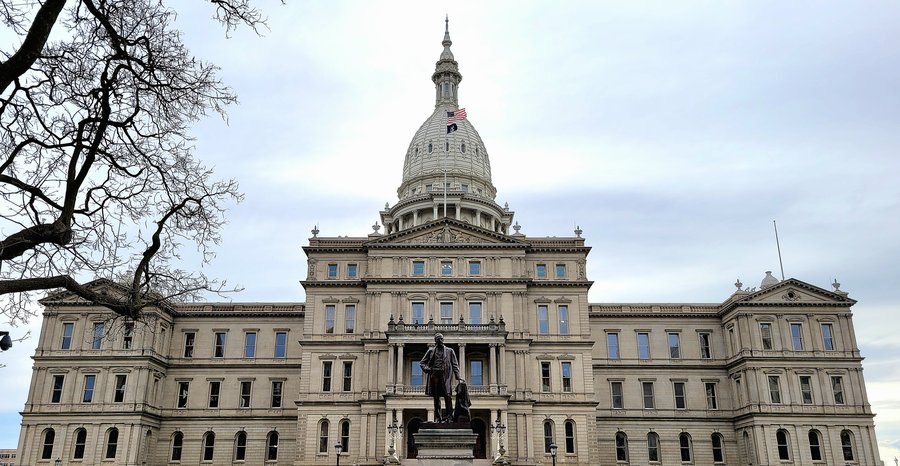
A federal judge has dismissed the Trump administration's lawsuit against Michigan's cage-free egg law, leaving in place the state's rule that eggs sold there must come from hens housed to its cage-free standards.
U.S. District Judge Jane M. Beckering of the Western District of Michigan issued the 12-page opinion on Wednesday, 7 October. Michigan Attorney General Dana Nessel announced it on Friday.
What the fight was about
Michigan amended its animal-care law in 2009 and 2019 to set minimum housing standards for egg-laying hens, such as a set amount of usable floor space for each bird, the judge's opinion says. The law also bans businesses from knowingly selling eggs in Michigan from hens kept in conditions that break those standards. The sales ban took effect on 1 January 2025, CBS Detroit reported.
In January 2026 the federal government sued. It argued that the Michigan law conflicts with the Egg Products Inspection Act, a 1970 federal law on egg safety, labelling and quality standards, and is therefore invalid. Under the Constitution, a valid federal law overrides a state law that conflicts with it, a principle known as preemption.
The administration also tied the case to grocery bills. "Michigan's ban on noncompliant eggs restricts supply and increases compliance costs, contributing to higher prices for American families," the lawsuit argued, Agri-Pulse reported.
What the judge decided
Beckering did not decide whether federal law overrides Michigan's. She ruled that the United States had no right to bring the case in the first place, because it had not shown that it was harmed.
That requirement is called standing. A party that sues in federal court must show it has suffered, or is about to suffer, a real, specific injury of its own. It is not enough to dislike a law or think it is illegal.
The government's theory, the judge wrote, was that it is injured "whenever a state enforces a law that conflicts with federal law." She rejected that. "The mere existence of a state law that is preempted—and therefore invalid—does not itself injure Plaintiff," she wrote. "Plaintiff identifies no federal operation, interest, or property that Michigan has impaired by enacting or enforcing the Sales Ban."
She also noted a tension in the government's case: it relied on a federal law "enacted to protect consumers from unwholesome, adulterated, or improperly labeled or packaged eggs" to try to strike down a state law that was itself written to "protect the health and safety of humans."
The case was dismissed "without prejudice," which means the government could file a new lawsuit if it can show a real injury.
Who defended the law
Michigan was joined in court by its own egg industry. Michigan Allied Poultry Industries, a farm group, and several animal welfare organisations, including Animal Wellness Action and Humane World for Animals, intervened to defend the law. Nancy Barr, the poultry group's executive, has said producers spent "hundreds of millions of dollars" converting their farms, Agri-Pulse reported.
"This lawsuit was a thinly veiled attempt by the federal government to shift blame for higher costs at the grocery store from the President's own failed policies to state laws that protect animal welfare," Nessel said.
The prices behind it
U.S. egg prices hit records in 2025 after an outbreak of bird flu killed millions of laying hens. The average price of a dozen eggs, well under $3 for years, reached $6.22 in March 2025, CBS Detroit reported. In July, the Justice Department and more than a dozen states reached a settlement with three major producers over claims that they had coordinated to push egg prices up between June 2022 and March 2025, CBS Detroit reported.
A federal judge in California dismissed a virtually identical federal lawsuit in March, Agri-Pulse reported.
What it means in practice
Nothing changes in Michigan stores: eggs sold there must still come from hens kept to the state's standards. The ruling does not say whether such state laws are legal under federal law; it says only that the federal government did not show it had the right to ask. Several other states, including Ohio, have similar laws, CBS Detroit reported.
What happens next
The administration can appeal to the U.S. Court of Appeals for the Sixth Circuit or file a new case. Its next step has not been reported.