Pakistan Takes Over Imran Khan's Province
Pakistan's president suspended the elected government of Khyber Pakhtunkhwa, the only province run by jailed former prime minister Imran Khan's party, and handed it to a governor appointed by the federal government, initially for six months; the party says the province's chief minister was arrested, while the government says he is in protective custody.
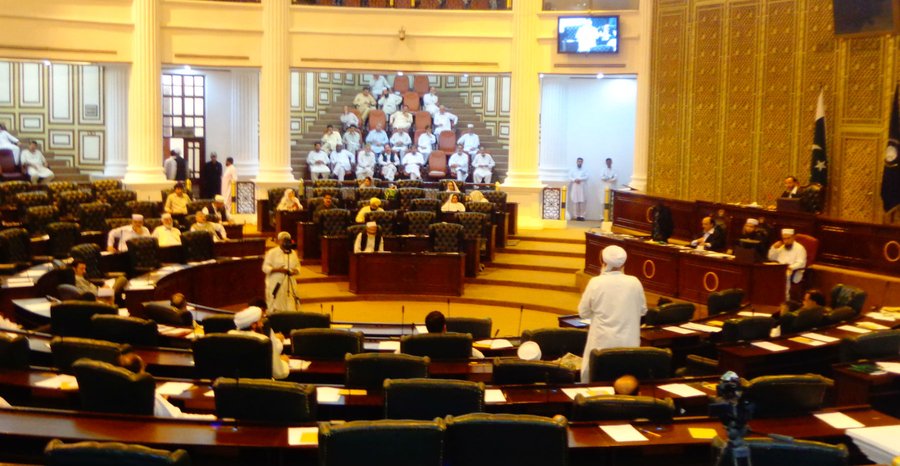
Islamabad — Pakistan's President Asif Ali Zardari on Sunday, 11 October, declared a state of emergency in Khyber Pakhtunkhwa, the north-western province that borders Afghanistan, and suspended its elected government. The province is the only one governed by Pakistan Tehreek-e-Insaf (PTI), the party of former Prime Minister Imran Khan, who has been in prison for more than three years.
Zardari acted on the advice of Prime Minister Shehbaz Sharif after an emergency cabinet meeting in Islamabad, the president's office said. A statement from the prime minister's office said ministers had taken note of the "provincial government's deliberate disengagement from the fight against terrorism."
Khan's party denounced the move. "More of a coup disguised as emergency," said PTI spokesperson Zulfikar Bukhari, who warned that it risked "further bloodshed" and instability.
What the government did
The president used two articles of Pakistan's constitution at once, Dawn reported.
Article 232 lets the president proclaim an emergency when the country's security is threatened "by war or external aggression, or by internal disturbance beyond the power of a provincial government to control." During such an emergency, the national parliament can pass laws for the province on subjects that normally belong to the province.
Article 234 allows what Pakistanis call governor's rule: when the government of a province "cannot be carried on" under the constitution, the president can hand its powers to the provincial governor, an official appointed from Islamabad. Such a proclamation must go to a joint sitting of both houses of parliament. It lapses after two months unless parliament approves it, can be extended two months at a time, and can never last more than six months, the constitution says.
Governor Faisal Karim Kundi, a member of Zardari's Pakistan Peoples Party, now runs the province with an 11-member advisory council of technocrats, Dawn reported. Law Minister Azam Nazeer Tarar told reporters the arrangement would initially last six months but could stay "as long as needed," Reuters reported. The army has been deployed to help the governor keep order, the law minister said, according to the state broadcaster Radio Pakistan. The federal government also installed a new chief secretary, the province's top civil servant.
The proclamation, published in the government's official gazette, removes the chief minister, his ministers and his advisers from office and lets the national parliament use the provincial assembly's law-making powers, according to Pakistani news reports of its text. The elected assembly itself has not been dissolved, lawyers told Pakistan Today, and one lawyer said the chief minister and his cabinet could return to office without a new election once the emergency ends. Information Minister Attaullah Tarar said on Sunday night that the chief minister's return was not under consideration, Dunya News reported.
The president did not invoke Article 233, which allows some fundamental rights to be suspended during an emergency, Dawn reported.
The chief minister
Hours after the announcement, PTI said the province's chief minister, Sohail Afridi, had been arrested along with Junaid Akbar, the party's provincial president. Late on Sunday, Attaullah Tarar said Afridi was in "protective custody" and had not been arrested, Dunya News reported. Earlier, Minister of State for Interior Tallal Chaudhry said some people had been detained "in view of the law and order situation," and that those with no criminal record would be released, Dawn reported. A close aide told Reuters that restrictions had been placed on Afridi's movements.
Internet service was slowed or cut in parts of some cities, including the provincial capital Peshawar, according to Dawn and the internet monitoring group NetBlocks. Shipping containers blocked several roads in Peshawar, Dawn reported.
Why now
The move came a week after PTI supporters gathered in the province to march on Islamabad and demand Khan's release, Reuters reported. The march had been planned for 27 September and was postponed to 4 October to allow talks between the government and the party, Al Jazeera reported. Before it set off, hundreds of activists and three of Khan's sisters were detained.
The government has deployed tens of thousands of security forces in Islamabad and lined roads with containers to stop marchers from reaching parliament, Reuters reported.
Khan, 74, is a former cricket star. Candidates backed by his party won the most seats in the 2024 national election but formed a government only in Khyber Pakhtunkhwa. His supporters say the military rigged the vote against him; the military denies it. Of the criminal cases against Khan, all but one conviction have been suspended or overturned, with appeals pending, Reuters reported. He denies wrongdoing.
The federal government and the military accuse PTI of failing to curb militant attacks in the province, which have increased in recent months. PTI rejects that and says Islamabad has not given it the money and equipment it needs. "We can't just act as a silent spectator," Sharif told the cabinet. He also said: "I will not allow them to destabilise the economy," Dawn reported.
The reaction
Maulana Fazlur Rehman, a religious party leader the government had asked to mediate with PTI, condemned the move. "Imposition of emergency is an ambush on democracy," he said.
PTI Chairman Gohar Ali Khan said the party would fight the decision "on every constitutional, legal, and democratic forum," including the courts and assemblies. Lawyers told Pakistan Today the provincial leadership could ask the Federal Constitutional Court to rule on whether the conditions for an emergency really existed.
What it means in practice
For the province's people, decisions on policing, budgets and services are now made by a governor answering to Islamabad, not by the government they elected, for up to six months. Parliament must approve governor's rule within two months for it to continue.
For the rest of the world, Pakistan is a nuclear-armed country that borders Afghanistan, Iran, India and China, and it relies on support from the International Monetary Fund. Sharif told the cabinet he hoped to unlock a $1.2 billion IMF payment this year. A long confrontation between the government and the country's most popular opposition party adds risk to all of that.
What happens next
PTI says it will challenge the emergency in court. The party says the march on Islamabad will go on, but on Sunday night it stalled in Swabi district as police arrested dozens of party workers, the Express Tribune reported. Parliament must approve governor's rule within two months; the government says it will call both houses within days, starting with the National Assembly on Tuesday.