
Antitrust · Washington
Corteva Agrees to End Pesticide Loyalty Payments
Pesticide maker Corteva would stop paying distributors to shun cheaper generic pesticides for 10 years and pay 12 states $35 million, if a federal judge signs the proposed order.
By ClarkWashington · Tuesday, 29 September 2026
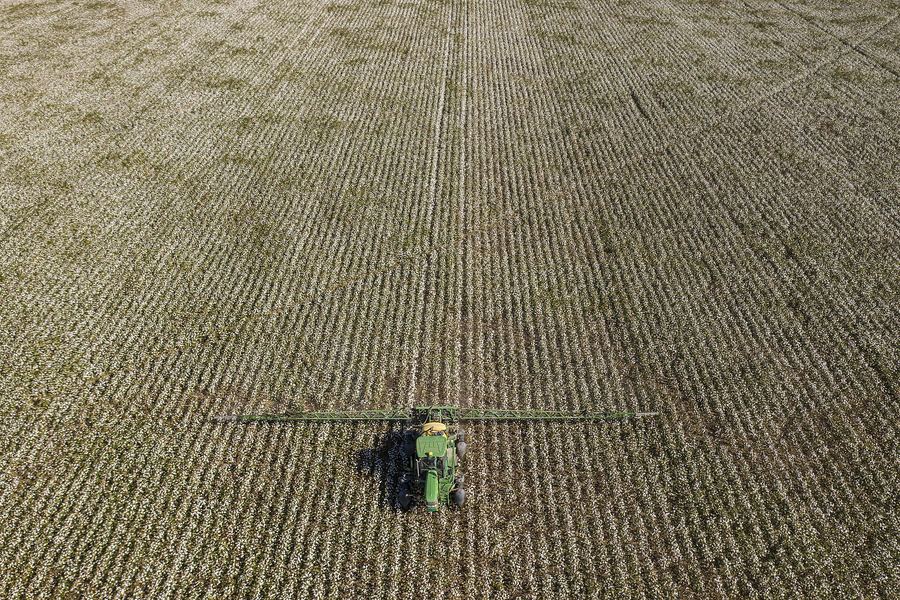
Washington — The Federal Trade Commission and a coalition of state attorneys general announced on 28 September a proposed settlement with Corteva Inc., one of the largest makers of agricultural chemicals in the United States, over loyalty programs that the government says kept cheaper generic pesticides off farm shelves after Corteva's patents expired.
If a federal judge signs the stipulated order — a written settlement that becomes a binding court order when the judge approves it — Corteva would be barred for ten years from the kinds of share-based loyalty payments the complaint challenged, and would pay $35 million to the state plaintiffs. The FTC's release notes that stipulated orders have the force of law when approved and signed by the district court judge. Until that signature, the deal is an agreed proposal, not yet a final judgment.
What a loyalty program is here
When a patent on a pesticide active ingredient expires, other companies can usually sell generic versions of the same chemical at lower prices. Farmers should then be able to choose the cheaper product. The FTC and states sued Corteva and Syngenta in 2022, alleging each company ran a post-patent loyalty program that paid distributors year-end bonuses if those distributors bought all, or nearly all, of their needs for certain active ingredients from that brand-name maker — leaving little room for generics.
A distributor is the middle business that warehouses chemicals and sells them on to retailers and farms. If the big brand pays the distributor only when the distributor stays loyal, generics can be shut out of the channel even after the patent clock has run out. The complaint said that kept prices high and forced U.S. farmers to overpay for crop-protection products.
The settlement announced Monday resolves only the claims against Corteva. The FTC said litigation against Syngenta continues.
What Corteva must stop
For ten years, the proposed order would prohibit Corteva from:
- Running loyalty programs that condition payments to a distributor on buying more than half of its requirements of a given pesticide active ingredient from Corteva;
- Running share-based programs that cap how much generic product a distributor may buy at under 50 percent (or a volume equivalent);
- Using volume-based loyalty schemes designed to recreate a banned share-based program;
- Using other listed conditions that amplified the exclusionary effect on generics;
- Discriminating against or threatening customers because they refuse exclusive or loyalty terms or because they do business with Corteva's competitors, including generic makers.
The order would cover all of Corteva's post-patent active ingredients, not only the three examples named in the original complaint. David Shaw, principal deputy director of the FTC's Bureau of Competition, said the agreement would give farmers better options at lower prices.
Who is involved
The Commission voted 2–0 to approve the proposed stipulated order. It was filed in the U.S. District Court for the Middle District of North Carolina. State co-plaintiffs named by the FTC are California, Colorado, Illinois, Indiana, Iowa, Minnesota, Nebraska, Oregon, Tennessee, Texas, Washington and Wisconsin. The $35 million payment goes to those state plaintiffs to resolve their monetary claims; the FTC release does not describe a separate cash payment to the federal agency in this announcement.
The FTC tied the deal to a broader cost-of-living theme, citing a recent settlement with farm-equipment maker Deere & Company. That parallel is agency framing; the Corteva order stands on its own terms.
What happens next
A federal judge in the Middle District of North Carolina must approve and sign the order before it binds Corteva. Syngenta remains in active litigation under the same 2022 complaint theory. The order does not set prices. It opens distributors to cheaper generic products once patents expire, and the FTC expects that competition to lower prices. Whether prices actually fall, and how fast, will depend on how distributors and generic makers use the new room.
Floor: FTC and state attorneys general announced 28 September 2026 a proposed stipulated settlement with Corteva Inc. ending challenged post-patent pesticide loyalty programs for 10 years and requiring $35 million to state plaintiffs (FTC press release). Filed: U.S. District Court, Middle District of North Carolina. Commission vote: 2–0. States: California, Colorado, Illinois, Indiana, Iowa, Minnesota, Nebraska, Oregon, Tennessee, Texas, Washington and Wisconsin. Syngenta claims remain pending. Stipulated orders bind when the district judge approves and signs (FTC note). Complaint theory: loyalty payments conditioned on nearly exclusive purchases blocked generics after patents expired (FTC). Sources: Federal Trade Commission, 28 Sep 2026.
Sources: Federal Trade Commission, 28 Sep 2026.