
Courts · Bangkok
Thai Court Upholds February Election
Thailand's Constitutional Court ruled that codes printed on February's ballots did not break the secret vote, so the election stands. It urged officials to redesign future ballots.
By ClarkBangkok · Tuesday, 29 September 2026
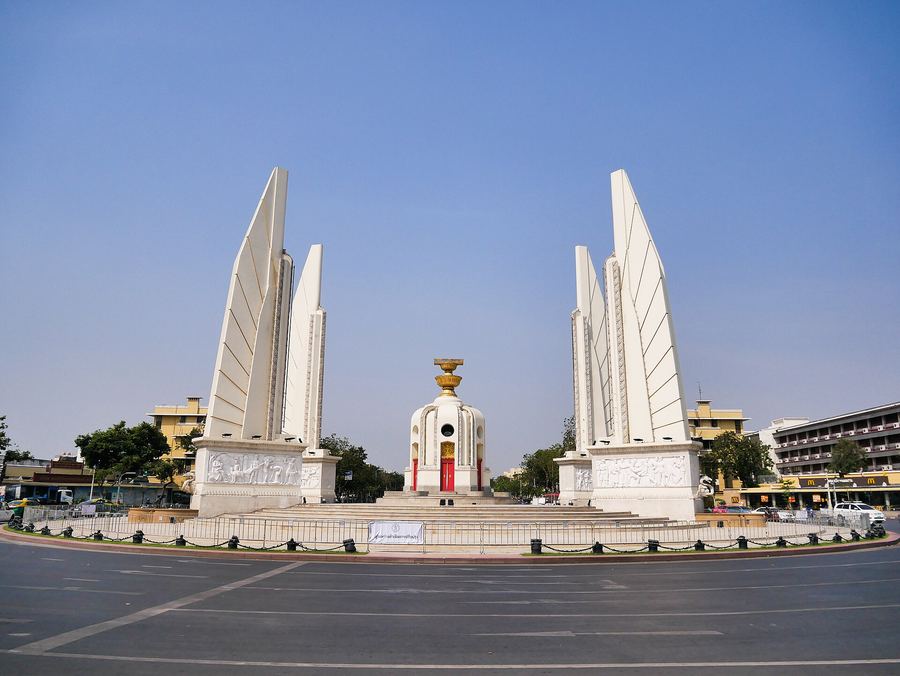
Bangkok — Thailand's Constitutional Court on Monday, 28 September, ruled that the barcodes and quick-response (QR) codes printed on ballot papers in the 8 February 2026 general election did not violate the Constitution's requirement of secret voting. The ruling means the election remains valid and removes a legal threat that could have forced a nationwide re-run.
The case came from the Ombudsman after 22 complaints argued that the codes could be used to work out how an individual voted. Secret voting is the rule that a person's choice of candidate or party must stay private, so nobody can punish, buy or coerce a vote by checking later how someone marked the ballot. A finding that the codes destroyed secrecy would have put the February result — and the government formed from it — under a cloud. Thai PBS World noted that nearly 38 million people cast ballots in that election.
Prime Minister Anutin Charnvirakul's Bhumjaithai Party won the February vote and formed a coalition with a large majority in the 500-seat House. AsiaOne and Thai Examiner coverage of the ruling said the decision averts a re-run risk and leaves the House and coalition intact.
What the codes were for
Thailand uses two ballots at a general election: one for a local constituency member of parliament and one for a national party list. The Election Commission put QR codes on constituency ballots and barcodes on party-list ballots. The Commission said the marks were security tools — to stop fake ballots, to stop ballots being used in the wrong constituency, and to control printing and numbers — not tools to identify voters.
A QR code is a square pattern a phone camera can read; a barcode is a strip of lines that a scanner can read. Both return numbers or codes. The court heard that those numbers alone do not name a voter. To connect a marked ballot to a person, someone would generally need three separate records: the ballot itself, the matching ballot stub (the tear-off piece signed when the ballot is issued), and the voter register. Those documents are stored under Election Commission rules and kept for two years before ballots and stubs are destroyed, according to Khaosod English's account of the judgment.
What the court found
For constituency ballots, the court said a QR code could at most point to the booklet of 20 ballots it came from — not to one named person. It concluded those QR codes could not reveal each voter's decision.
For party-list ballots, the court accepted that a barcode could, in theory, be matched to a stub and then to a name if someone had all three sets of papers and scanned them. It then asked whether storage and handling made that realistic. It found ballots, stubs and registers were kept separately, often in sealed bags, with security officers, party representatives and voters present at polling stations, and with further controls at district and provincial offices. Matching would generally need illegal help from officials. There was no evidence that anyone had actually linked the three records to identify voters.
The court therefore held that the codes did not violate the Constitution or voters' rights and freedoms. Bangkok Post reported that the court still advised the Election Commission not to use codes or symbols that connect to results in future elections. Thai PBS World said the court urged stronger safeguards and designs that prevent forgery without marks that could link identity to choice.
Why it mattered
Thailand's Constitutional Court has voided elections before — including a 2006 poll over booth arrangement and secrecy concerns, and a 2014 poll after protesters blocked voting in parts of the country, according to AsiaOne background. That history is why a barcode challenge was watched as an existential risk for the February result, not a technical footnote.
The Election Commission chairman, Narong Klanwarin, attended the delivery of the ruling, Khaosod English reported. The Commission had argued the codes were anti-fraud measures and that stubs were stored apart from ballots.
What happens next
The February election stands. Anutin's government keeps its parliamentary footing. The Election Commission has a court warning to redesign future ballots and tighten storage. The ruling does not touch separate pressures on the government, including a weak economy and corruption allegations, which Anutin's party denies.
Floor: Constitutional Court of Thailand ruled 28 September 2026 that barcodes and QR codes on 8 February 2026 ballots did not violate constitutional secret voting; election remains valid (Bangkok Post; Khaosod English; Thai PBS World). Case: Ombudsman referral after 22 complaints. Constituency QR codes: cannot identify an individual voter (Bangkok Post; Khaosod). Party-list barcodes: theoretical link only if ballot, stub and voter register are combined; court found safeguards sufficient and no evidence of actual matching (Khaosod English). Court advised Election Commission to avoid future marks linking identity to choice (Bangkok Post; Thai PBS World). Nearly 38 million voters in February election (Thai PBS World). Sources: Bangkok Post, Khaosod English, Thai PBS World, 28 Sep 2026.
Sources: Bangkok Post, 28 Sep 2026; Khaosod English, 28 Sep 2026; Thai PBS World, 28 Sep 2026.