
Courts · New York
Federal Judge Blocks New York's Climate Superfund Law
A federal judge in Manhattan ruled on 23 September that New York's law seeking up to $75 billion from fossil-fuel companies for climate costs is unconstitutional, and barred its enforcement.
By ClarkNew York · Tuesday, 29 September 2026
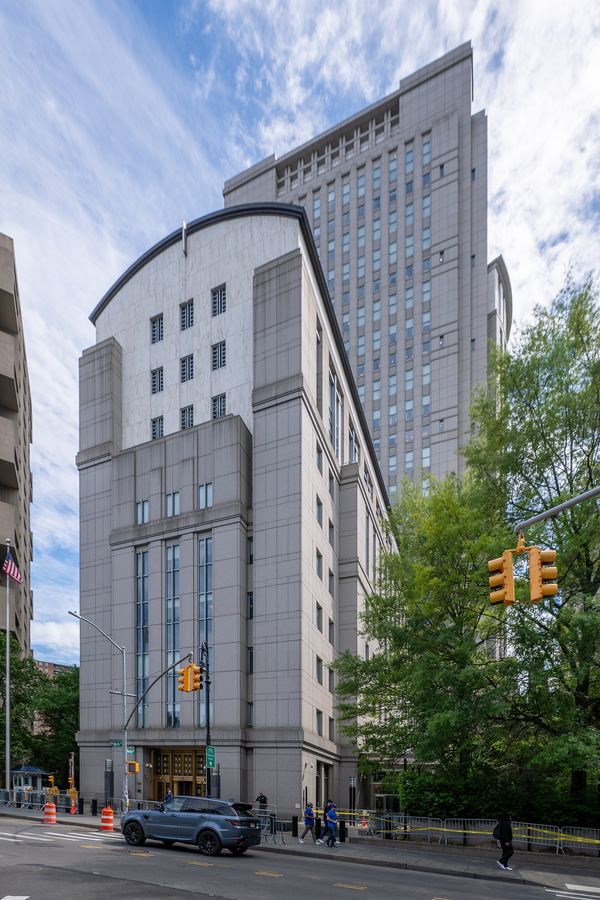
New York — A second federal judge has invalidated New York's Climate Change Superfund Act, the state law that sought to make large fossil-fuel producers and refiners pay into a fund of up to $75 billion for climate-related costs. Judge P. Kevin Castel of the federal court in Manhattan ruled on Wednesday, 23 September, deciding for the Trump administration without a full trial and permanently barring the state from enforcing the law. The U.S. Department of Justice publicized the decision on 28 September.
Castel held that the federal government has standing — the legal right to sue — to protect its authority over interstate greenhouse-gas rules and foreign affairs, and that New York's statute is preempted. Preemption means federal law overrides state law in that area. Castel found preemption on two independent grounds: the Clean Air Act, the main federal air-pollution statute, displaced the old federal common-law path for interstate emissions claims; and the foreign-affairs doctrine, which limits states from setting their own foreign policy, also bars the law.
What the superfund law tried to do
New York enacted the Climate Change Superfund Act to charge major companies that extract fossil fuels or refine crude oil for a share of costs tied to greenhouse-gas emissions and climate damage inside the state. Supporters cast it as making polluters pay. The Justice Department, suing New York and Vermont over similar measures, called such laws an unlawful attempt to extract money from out-of-state energy businesses and to second-guess national energy and climate policy.
Castel's 35-page ruling came on 23 September, according to Bloomberg Law and Inside EPA. The Justice Department's statement also pointed to an earlier loss for New York in a separate case in the state's Northern District, the federal court for upstate New York.
The first ruling, then the second
On 31 August, Chief Judge Brenda Sannes of that upstate court also ruled against the superfund law in a case brought by West Virginia, other Republican-led states and business groups, finding it preempted by federal law, including the Clean Air Act. Castel's decision in Manhattan federal court is the second federal ruling against the law. Associate Attorney General Stanley E. Woodward Jr. and Principal Deputy Assistant Attorney General Adam Gustafson of the Energy and Natural Resources Division praised both outcomes in the 28 September Justice Department statement, arguing states cannot set national policy on global pollution.
New York Attorney General Letitia James's office had not commented on Castel's ruling, The Center Square reported, and the state has not said whether it will appeal to the U.S. Court of Appeals for the Second Circuit. Appeals are the ordinary next step when a state loses a constitutional challenge of this scale.
Why the legal theory matters
Climate "superfund" bills try to use state power to collect large sums from energy companies for past and ongoing emissions. Federal courts in these New York cases say that approach collides with the Clean Air Act's national framework and with the federal government's role in foreign climate diplomacy. The practical effect is immediate: New York cannot start billing companies under the law while Castel's order stands. The Justice Department has also sued Vermont over a similar law.
What happens next
New York can appeal. The Justice Department says it will keep challenging state laws it views as burdens on domestic energy development. Energy companies named as payers under the superfund design are not writing $75 billion checks under a blocked law. Whether the Second Circuit agrees with Castel and Sannes will decide if New York can revive the program.
Floor: U.S. District Judge P. Kevin Castel of the federal court in Manhattan ruled on 23 September 2026 for the United States without a full trial, found New York's Climate Change Superfund Act unconstitutional and overridden by federal law, and permanently barred its enforcement (Justice Department, 28 Sep; Bloomberg Law, 25 Sep; Inside EPA, 24 Sep). Grounds: the Clean Air Act does not authorize the law, and the law intrudes on federal control of foreign affairs (Justice Department). The law sought up to $75 billion from fossil-fuel producers and refiners. Earlier ruling: Chief Judge Brenda Sannes, federal court for upstate New York, 31 August 2026, also against the law. New York has not said whether it will appeal. Sources: Justice Department; Bloomberg Law; Inside EPA; The Center Square, 24–28 Sep 2026.
Sources: U.S. Department of Justice, 28 Sep 2026; The Center Square, 24 Sep 2026; Bloomberg Law, 25 Sep 2026; Inside EPA, 24 Sep 2026.