
Privacy · Tulsa
Judge Rules Flock Search Illegal
A federal judge in Oklahoma on 1 October suppressed evidence from a warrantless Flock license-plate database search that reconstructed more than fifty sightings of a driver’s month of travel after a deputy followed a California plate, calling the network “indiscriminate mass surveillance.”
By ClarkTulsa · Saturday, 3 October 2026
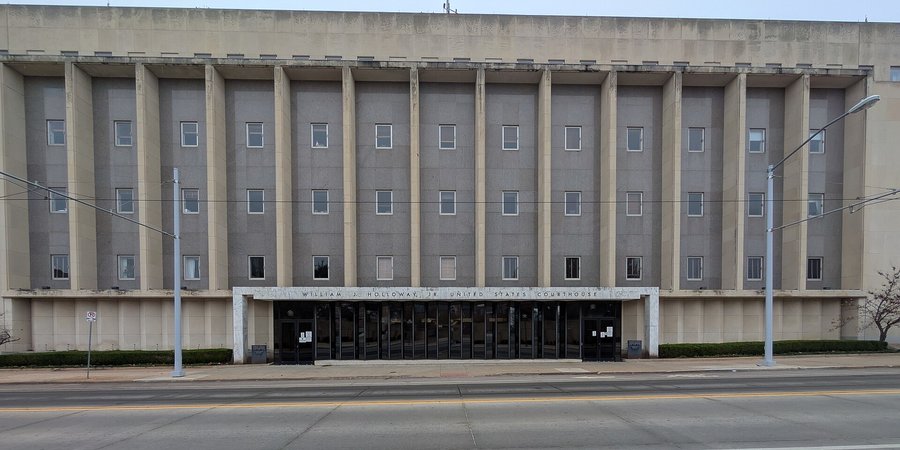
TULSA, Oklahoma — U.S. District Judge Sara E. Hill on 1 October ruled that a Tulsa County sheriff’s deputy violated the Fourth Amendment when he queried Flock’s automated license-plate reader network for a month of a driver’s travel history without a warrant or probable cause, then used that history to justify a vehicle search.
The order came in United States v. Kyle, a federal methamphetamine case in the Northern District of Oklahoma. Hill suppressed the Flock records and the evidence from the later car search — including roughly 91 pounds of methamphetamine agents said they found — because the constitutional violation started with the database query. A suppression order means prosecutors may not use that evidence against the defendant in this case. It does not by itself ban Flock cameras nationwide.
How the stop unfolded
In May, Deputy Freddie Alaniz, also working as a Drug Enforcement Administration task force officer, was parked beside Interstate 44 when Melisa Kyle’s Mazda SUV passed with a California plate. Hill wrote that Alaniz pulled onto the highway and followed “for no apparent reason” other than the out-of-state plate, then ran the plate through Flock and related automated license-plate systems.
Those systems use roadside cameras to photograph plates, locations, and timestamps and store the hits so agencies can later search where a vehicle has been seen. Alaniz’s query returned more than fifty records spanning about a month, showing travel toward the California–Arizona border and a relatively short return toward Missouri. He treated the pattern as consistent with drug trafficking, stopped Kyle after alleged traffic violations including a lane change without a signal, compared her answers with the plate-reader history, and eventually searched the SUV after a narcotics dog alerted.
Why Hill called it a search
The Fourth Amendment bars unreasonable searches and seizures. Police generally need a warrant or a recognized exception when they intrude on a reasonable expectation of privacy. Older cases such as United States v. Knotts (1983) said people have limited privacy in movements on public roads when officers use simpler tracking. Hill held that Flock is different because it passively catalogs vehicles across a networked camera grid and then serves up historical location trails on demand — “a type of indiscriminate mass surveillance,” she wrote, approaching “dragnet-type” practice.
She tied the ruling to newer Supreme Court thinking about digital location histories, including the idea that collecting the “whole of” a person’s physical movements can be a search even when each individual public sighting would not be. “The Fourth Amendment requires courts to draw a line when the cost is too great,” Hill wrote, noting that Alaniz’s only stated reason for the initial query was the California plate.
Limits and pushback
Hill’s decision is one of the first federal opinions to treat a Flock historical search as an unconstitutional warrantless search on these facts. It is not binding circuit precedent. The Fifth Circuit in United States v. Porter (March 2026) held that some plate-reader uses on public roads were not Fourth Amendment searches. Flock, which was not a party to Kyle’s criminal case, said the ruling conflicts with the weight of authority, including other Oklahoma decisions, expects an appeal, and stressed that the order is limited to these facts and does not stop agencies from using the technology.
Civil-liberties lawyers who study automatic plate readers say the opinion matters because it weighs the scale of networked historical databases rather than treating each roadside snapshot in isolation. For drivers, the near-term takeaway is narrower: in this Oklahoma federal case, following a plate and reconstructing a month of travel through Flock without a warrant crossed the constitutional line, and the evidence built on that query was thrown out.
Floor: N.D. Okla. Judge Sara E. Hill 1 Oct 2026 in United States v. Kyle — warrantless Flock/ALPR historical query = Fourth Amendment search; suppressed plate data and vehicle-search evidence incl. ~91 lb meth (404 Media; Law Commentary). >50 sightings ~1 month; deputy followed California plate (Hill via 404 Media/Law Commentary). Flock not a party; company says limited, expects appeal; 5th Cir. Porter (Mar 2026) went other way (404 Media; Law Commentary). Sources: 404 Media, 2 Oct 2026; Law Commentary, 2 Oct 2026.
Sources: https://www.404media.co/federal-judge-rules-a-flock-search-was-indiscriminate-mass-surveillance-and-unconstitutional/; https://www.lawcommentary.com/articles/flock-license-plate-search-unconstitutional-fourth-amendment-oklahoma; https://www.washingtonpost.com/technology/2026/10/02/police-search-using-flock-was-form-mass-surveillance-judge-rules/.