
Energy · Baltimore
Google to Fund Nuclear Power Upgrades
Google signed a 20-year deal on 6 October to buy power from upgrades at 11 Constellation Energy reactors in Illinois, Pennsylvania and New Jersey, adding 890 megawatts, about one large reactor's output. The first is due in 2028.
By ClarkBaltimore · Wednesday, 7 October 2026
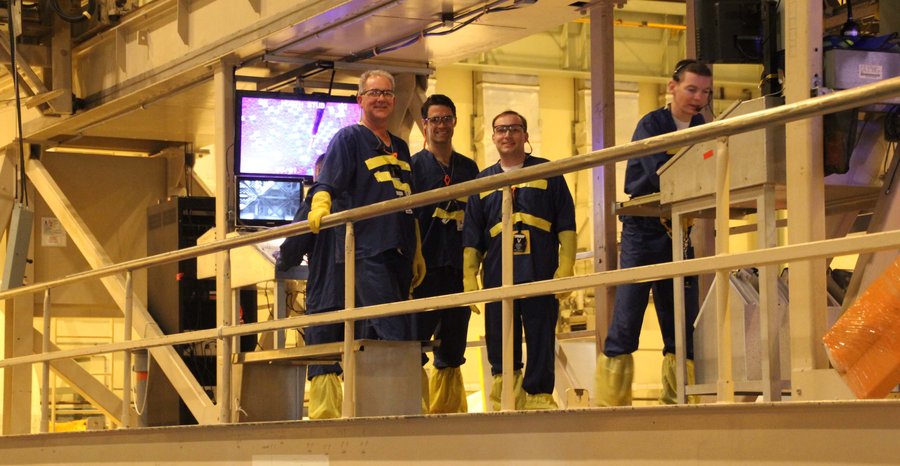
Baltimore — Google and Constellation Energy, the largest operator of nuclear power plants in the United States, announced on 6 October a 20-year agreement under which Google will pay for upgrades that squeeze more electricity out of 11 reactors the company already runs.
The upgrades are to add 890 megawatts of new generating capacity to the regional grid in 13 states, roughly the output of one large new nuclear reactor, the companies said. The first upgraded unit is expected to start delivering power in 2028. Google said all the projects should be finished before the end of 2032.
Why it matters
The companies said U.S. electricity demand is growing quickly because of new manufacturing, industry switching to electric power, and digital infrastructure such as data centres, the warehouses of computers that run online services and artificial intelligence. Big technology companies have been striking unprecedented deals with power companies to supply their data centres, CNBC reported.
The deal is set in PJM, the organization that runs the high-voltage grid and the wholesale power market across 13 states in the Mid-Atlantic and Midwest, from New Jersey to Illinois. PJM serves 67 million people, Google said. CNBC reported that PJM's management has proposed requiring new data centres either to bring their own power supply or accept being cut off remotely when demand peaks. The companies said their deal is a response to that "bring your own power" proposal.
How an uprate works
The extra power will not come from a new plant. It comes from what the industry calls an uprate: replacing or modernizing turbines, steam generators and digital control systems at a working reactor so it turns more of its heat into electricity. Because the reactors already exist and are already connected to the grid, an uprate avoids the many years it takes to build a new plant and the long queue to connect new power sources to the grid, the companies said.
The upgrades will be made at 11 reactors on six sites in Illinois, Pennsylvania and New Jersey. Constellation said the work represents more than $4.3 billion of new investment, will create about 7,200 construction jobs during the building period, and will help sustain about 4,400 existing jobs.
Google does not own the plants. It is signing a power purchase agreement: a long-term promise to buy the output at agreed terms. That guaranteed customer is what lets Constellation borrow and spend on the upgrades. Google said it will bear the costs so that other electricity customers do not.
The rest of the deal
Google also signed a separate 15-year agreement to buy another 2,700 megawatts from Constellation's existing power plants in the same grid, bringing the total to about 3,590 megawatts, CNBC reported. That part is not tied to any one plant and does not add new supply; it gives Constellation steady income to keep running plants it already has.
The companies said Google will also cut its own power use during emergencies on the grid by switching off less important computing work, and that Constellation will use Google's cloud and Gemini artificial-intelligence software to plan the upgrades and run its plants.
"We're committed to meeting our growth responsibly by actively investing in clean, reliable power that brings new capacity to our nation's grids," said Amanda Peterson Corio, Google's global head of energy and power. Constellation's chief executive, Joe Dominguez, called it "a model for how technology companies and the energy industry can work together."
The bigger picture
Nuclear plants produce nearly 20 percent of U.S. electricity and run around the clock, Google noted, and they release no carbon dioxide while they run. The Energy Department has set a goal of adding 5,000 megawatts of nuclear capacity by 2030 through uprates and by restarting closed plants, Google said.
Tech companies have already struck several such deals. In the past two years Constellation agreed to restart a reactor at Three Mile Island in Pennsylvania to supply Microsoft, and Google is backing the restart of the Duane Arnold plant in Iowa with NextEra Energy, CNBC reported. With the new agreement, Google says its deals will enable more than 1,500 megawatts of new nuclear capacity from uprates and restarts.
What happens next
The upgrades still need engineering work, and any reactor that is to run at a higher licensed power level needs approval first from the Nuclear Regulatory Commission, the federal nuclear safety regulator, according to the commission. The first upgraded reactor is due to deliver power in 2028.
Floor: Google–Constellation agreements announced 6 October 2026: 20-year power purchase agreement for 890 MW from uprates at 11 Constellation reactors (six sites; Illinois, Pennsylvania, New Jersey), first delivery expected 2028, all by end-2032 per Google; separate 15-year supply agreement for 2,700 MW of existing PJM output; more than $4.3bn Constellation investment. Sources: Constellation/Google joint release; Google; CNBC; Nuclear Regulatory Commission.
Sources: https://www.googlecloudpresscorner.com/2026-10-06-Google-and-Constellation-Announce-Landmark-Agreement-to-Bring-890-MW-of-New-Nuclear-Capacity-to-PJM-Grid-as-Part-of-Long-Term-Power-Deal; https://blog.google/company-news/why-were-backing-americas-existing-nuclear-plants/; https://www.cnbc.com/2026/10/06/google-enters-massive-3point6-gw-power-deal-with-constellation-energy-.html; https://www.nrc.gov/reactors/operating/licensing/power-uprates.html.